
Call us now :08045801217
 Send Inquiry
 Send Inquiry
Pin On Disc Test Rig
Price 500000.0 INR/ Piece
MOQ : 1 Piece
Pin On Disc Test Rig Specification
- Equipment Type
- Pin On Disc Test Rig
- Material
- Mild Steel & Stainless Steel
- Processing Type
- Laboratory Equipment
- Condition
- New
- Technology
- Digital Motor Controller
- Dimension (L*W*H)
- 600 mm x 450 mm x 400 mm
- Power Mode
- Electrical
- Voltage
- 230 V AC, 50 Hz
- Power Consumption
- 350 W
- Pressure Output
- Up to 20 kg
- Application
- Wear & Friction Testing
- Coating Type
- Powder Coated
- Accessories
- Data Acquisition System, Standard Pin and Disc Sample, Protective cover, Display Unit
- Test Load Range
- 1 kg to 20 kg
- Frictional Force Measurement
- Strain gauge based sensor
- Calibration Standard
- Conforms to ASTM G99
- Safety Features
- Emergency stop, Overload protection
- Ambient Temperature Range
- 10C to 40C
- Pin Size
- 6 mm diameter x 30 mm length
- Mounting Type
- Benchtop
- Rotational Speed Control
- Variable via control panel
- Wear Measurement
- Linear displacement transducer
- Disc Diameter
- 165 mm
- Noise Level
- < 70 dB
- Display Type
- Digital LED/LCD Display
Pin On Disc Test Rig Trade Information
- Minimum Order Quantity
- 1 Piece
- Delivery Time
- 5-7 Days
Pin On Disc Test Rig About
Pin on disc friction/wear study involves a sharp pin, ball, or cone tip to wear against the disc surface. Usually, a constant normal load is applied from the pin towards the contact interface, using a weight set. A lateral force sensor is installed to measure the friction force. During the test, a wear track is gradually made on the disc surface due to the material's loss from friction. This is measured with the help of a gauge, or alternatively, a wear sensor can be used.
Rig follows ASTM Test Standard and is suitable for Laboratory use in industrial; academic as well as research purposes.
Specifications:
1. Disc Set (Material: MS; Aluminum and Brass Size:
125 mm Dia - 3 mm tk)
2. Pin Set (Material: MS; Aluminum and Brass) Size: 4
different head each)
3. Load Set 1 kg = 10 Nos.
4. Motor 1 HP Max Speed 1440 RPM
5. Control Pannel Specification:
Variable Frequency Drive for Speed Control
Digital RPM Indicator
Frictional Force Indicator
Timer Indicator with Relay Function
Main Indicator and Emergency Switch
6. Wear Measurement Surface Plate with Magnetic Dial
Gauge.
7. Optionally: Digital Depth Sensor; Optical Microscope
for Wear Measurement
8. Detailed Technical Manual and On-site Training
Service Required:
1. 230 V.A.C. single-phase supply.
2. Rigid platform or sturdy table with preferably a
solid foundation.
Advanced Wear & Friction Testing
Engineered for laboratory precision, this Pin On Disc Test Rig provides controllable test parameters and real-time data for assessing material behavior under sliding contact. Its digital motor controller ensures steady disc rotation, enabling studies on wear and friction properties across different material combinations in line with ASTM G99 protocols.
Intuitive Operation & Enhanced Safety
A user-friendly control panel enables variable rotational speeds and test load adjustments, making operation straightforward for both experienced technicians and new users. Built-in safety features, including emergency stop and overload protection, safeguard users and equipment throughout the test process.
Comprehensive Data Acquisition
Featuring a strain gauge-based sensor and a linear displacement transducer, the test rig provides accurate measurements of both frictional force and material wear. The included data acquisition system logs test results efficiently for analysis, while the digital LED/LCD display offers immediate test feedback.
FAQ's of Pin On Disc Test Rig:
Q: How does the Pin On Disc Test Rig measure wear and friction during tests?
A: The test rig utilizes a strain gauge-based sensor to precisely measure the frictional force between the pin and disc, while a linear displacement transducer tracks the wear by recording the change in pin length. Data is displayed in real-time on the digital LED/LCD screen and can be recorded via the included data acquisition system.Q: What is the process for setting up a test with this equipment?
A: Begin by selecting and mounting the standard pin and disc sample provided. Adjust the desired test load from 1 kg to 20 kg via the control panel, set the disc's rotational speed, and ensure the protective cover is in place. Once parameters are configured, start the test; safety features like emergency stop and overload protection are always active.Q: When is this Pin On Disc Test Rig most beneficial to use?
A: This test rig is ideal during the research and development phase of materials engineering, quality control checks, or academic investigations where wear and friction characteristics must be evaluated under various loads and speeds, ensuring robust and repeatable results.Q: Where can this equipment be installed for optimal use?
A: With its benchtop mounting design, the rig is intended for laboratory environments with a stable, level surface. Its compact dimensions (600 mm x 450 mm x 400 mm) make it suitable for standard lab benches with access to 230 V AC, 50 Hz power supply.Q: What are the main benefits of using this Pin On Disc Test Rig?
A: Users benefit from precise, consistent testing that conforms to ASTM G99 standards, real-time data capture with digital displays, and robust safety mechanisms. Its durable construction and complete accessory set ensure dependable operation for repeated laboratory use.Q: How is safety ensured during the operation of the test rig?
A: Safety during operation is ensured through features such as an emergency stop button for immediate shutdown, overload protection to safeguard both the operator and equipment, and a protective cover to shield users from moving parts.Q: What materials and coatings are used in the rig's construction?
A: The test rig is constructed from high-quality mild steel and stainless steel for durability, and protected by a powder-coated finish to resist corrosion and wear in laboratory environments.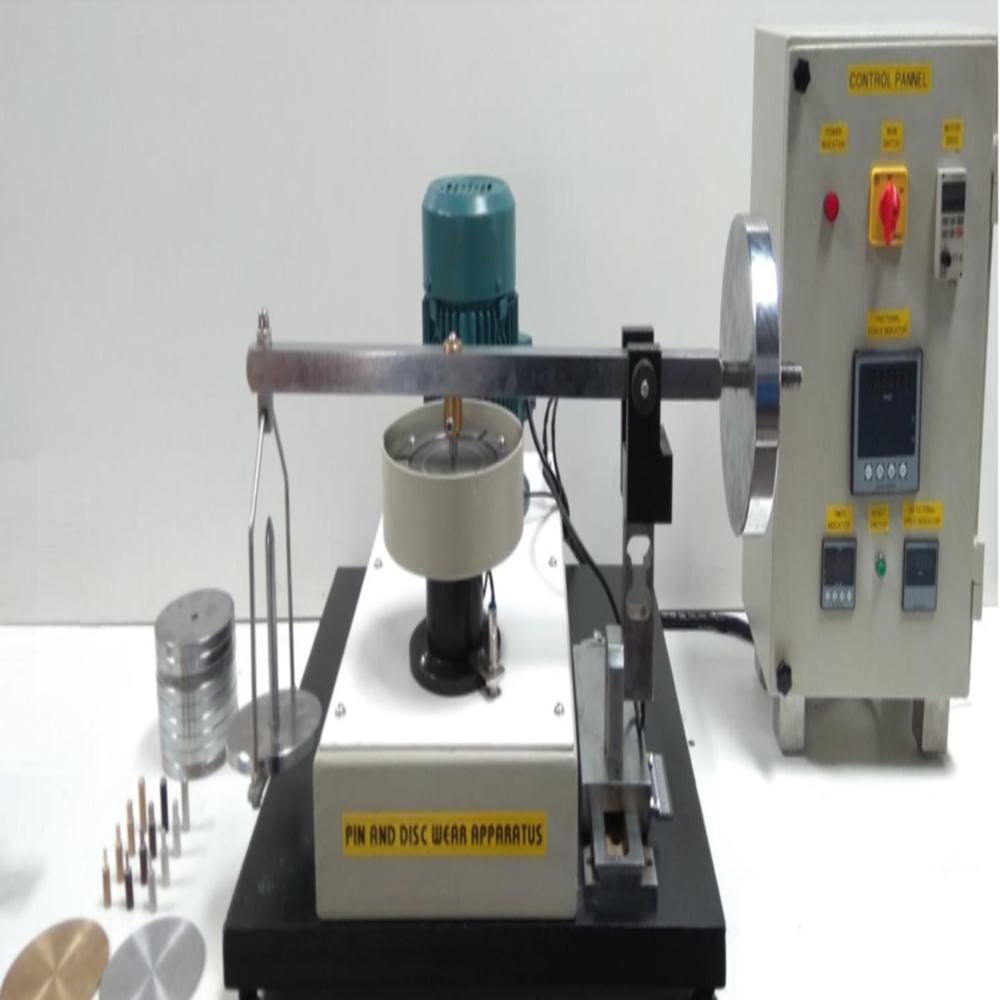
Tell us about your requirement

Price:
Quantity
Select Unit
- 50
- 100
- 200
- 250
- 500
- 1000+
Additional detail
Mobile number
Email

More Products in Custom Test Rigs Category
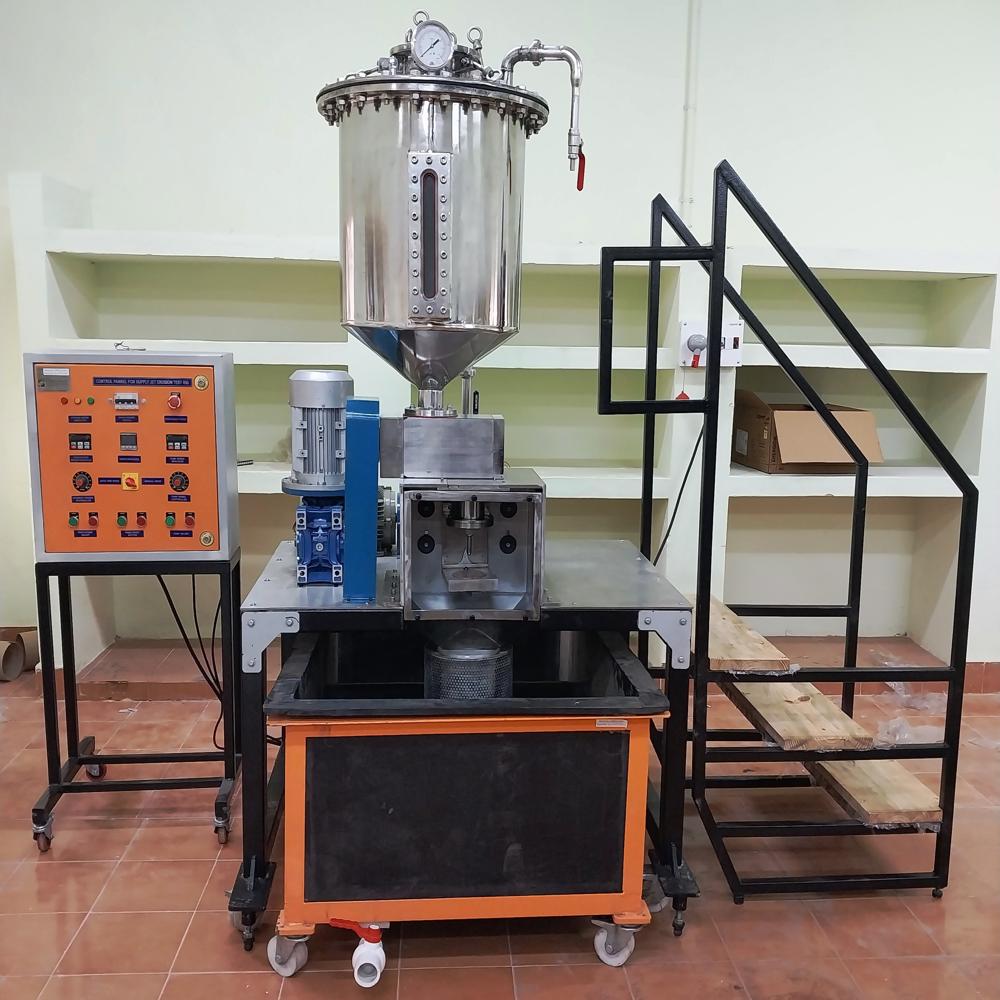
Slurry Jet Test Rig
Price 500000.0 INR / Number
Minimum Order Quantity : 1 Number
Pressure Output : Up to 5 Bar
Coating Type : Epoxy Coated (Corrosion Resistant)
Technology : Other, Jet Impingement Erosion Testing
Accessories : Sample Holder, Slurry Circulation Pump, Collection Tank, Control Panel

 Send Inquiry
Our Products


Plot No - 553, Phase 2 GIDC Vatva, Near Railway Station Vatva,Ahmedabad - 382445, Gujarat, India

Mr Devang Modi
(Director)
Mobile :08045801217
 Send Inquiry
 Send SMS
Developed and Managed by Infocom Network Private Limited.
