
Call us now :08045801217
 Send Inquiry
 Send Inquiry
Thermal Stratification Wind Tunnel
Price 500000.0 INR/ Unit
MOQ : 1 Unit
Thermal Stratification Wind Tunnel Specification
- Equipment Type
- Thermal Stratification Wind Tunnel
- Material
- Mild Steel, Acrylic, Aluminum
- Processing Type
- Testing Equipment
- Condition
- New
- Technology
- Thermal Stratification Simulation, Wind Tunnel Technology
- Dimension (L*W*H)
- 2200 x 600 x 900 mm
- Power Mode
- Electric
- Voltage
- 220V AC
- Power Consumption
- 750 W
- Pressure Output
- Digital & Analog Display
- Application
- Educational Research, Fluid Dynamics, Thermal Engineering Experiments
- Coating Type
- Powder Coated Body
- Accessories
- Flow Visualization Accessories, Manometers, Sensors, Test Models, Control Panel
- Temperature Range
- Ambient to 60C
- Flow Control
- Variable Speed Fan Control
- Chamber Length
- Up to 2 meters
- Heater Capacity
- 1 kW
- Air Velocity Range
- 0.5 to 15 m/s
- Safety Features
- Overload Protection
- Observation Section
- Transparent Acrylic Window
- Data Acquisition Interface
- Computer Compatible
- Weight
- Approx. 120 kg
Thermal Stratification Wind Tunnel About
The Thermal Stratification Wind Tunnel is designed to simulate thermally stratified atmospheric boundary layers, enabling precise investigation of airflow behavior under temperature gradient conditions.
Features
- Capable of generating stable vertical temperature gradients to reproduce thermal stratification.
- Provides uniform and controlled airflow suitable for high-precision experiments.
- Equipped with heating and cooling systems for accurate temperature control.
- Designed to minimize turbulence while maintaining flow stability and repeatability.
- Suitable for integration with measurement and visualization systems.
Applications
- Atmospheric boundary layer research
- Urban climate and environmental studies
- Dispersion of pollutants and heat
- Wind engineering and building aerodynamics
- Renewable energy and thermal flow analysis
Optional Systems
- Automated temperature and flow control
- Data acquisition and monitoring systems
- Custom test section configurations
Advanced Airflow and Temperature Simulation
Capable of simulating a wide range of airflow velocities and thermal stratifications, this wind tunnel is suitable for universities, research labs, and industrial testing. The variable speed fan and 1 kW heater deliver precise environmental control, replicating real-world scenarios for comprehensive studies.
User-Friendly Data Acquisition and Observation
Equipped with a computer-compatible data interface, the wind tunnel allows seamless data recording and analysis. The transparent acrylic window in the observation section is designed for direct visual monitoring of experiments, enhancing user understanding of flow and temperature dynamics.
FAQ's of Thermal Stratification Wind Tunnel:
Q: How do you control the airflow and temperature in the wind tunnel?
A: Both airflow and temperature are regulated via a variable speed fan and a 1 kW heater. Users can adjust fan speed for desired air velocity (0.5 to 15 m/s) and heater settings to set temperatures up to 60C, providing versatile testing conditions.Q: What benefits does the transparent observation section offer?
A: The transparent acrylic observation window allows users to directly observe thermal layering and airflow patterns, which improves understanding of experimental behaviors and supports better analysis while ensuring safety.Q: When is this wind tunnel typically used in research or education?
A: This device is commonly employed for experiments involving thermal stratification, HVAC studies, environmental simulation, and aerodynamic research in both academic and industrial environments.Q: Where can this wind tunnel be installed and used?
A: Owing to its manageable size and weight (approximately 120 kg), the thermal stratification wind tunnel can be installed in university labs, research institutions, and industrial R&D facilities for diverse applications.Q: What is the process for collecting and analyzing data?
A: The wind tunnel includes a computer-compatible data acquisition interface. Users can connect it to a computer to conveniently record, monitor, and analyze airflow and temperature data during experiments.Q: How do the safety features protect users and equipment?
A: Built-in overload protection safeguards the system against excessive electrical loads or faults, ensuring safe operation for both users and the equipment.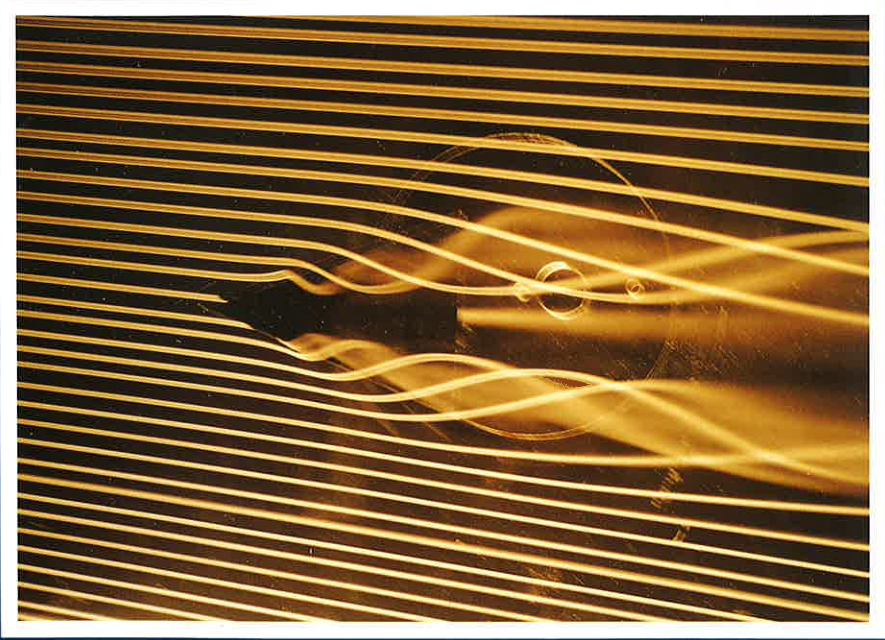
Tell us about your requirement

Price:
Quantity
Select Unit
- 50
- 100
- 200
- 250
- 500
- 1000+
Additional detail
Mobile number
Email

More Products in Water Tunnel Category
Acoustic Bubble Spectrometer
Price 500000.0 INR / Number
Minimum Order Quantity : 1 Number
Equipment Type : Acoustic Bubble Spectrometer
Application : Bubble detection, liquid analysis, process monitoring
Propeller Open Boat
Price 500000.0 INR / Number
Minimum Order Quantity : 1 Number
Equipment Type : Open Boat with Propeller
Application : Passenger and Cargo Transport
Accessories : Oars, Lifejackets, Anchor
Coating Type : Corrosion Resistant Marine Coating
Fluid Mechanics System
Price 500000.0 INR / Number
Minimum Order Quantity : 1 Number
Equipment Type : Fluid Mechanics Test Bench
Application : Lab Testing, Educational Demonstrations, and Research
Accessories : Instruction Manual, Connecting Hoses, Fittings
Coating Type : Powder Coated
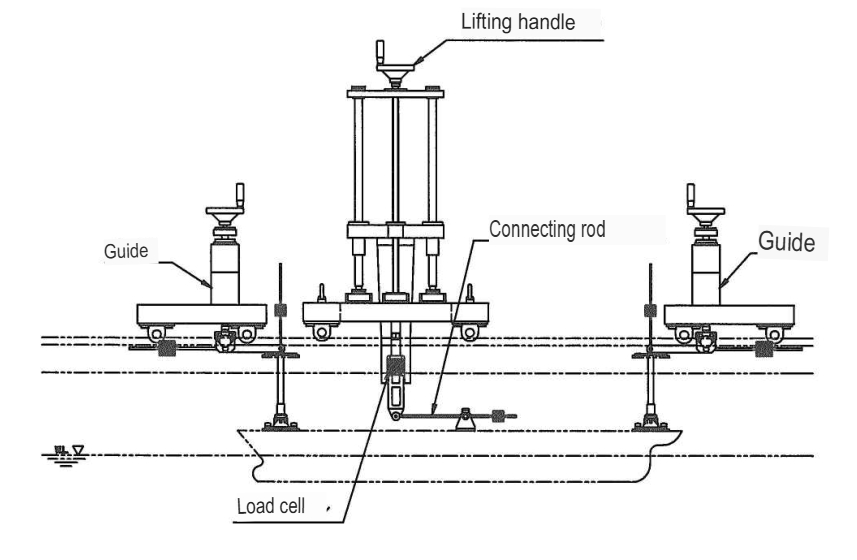
Resistance Tester
Price 500000.0 INR / Piece
Minimum Order Quantity : 1 Piece
Equipment Type : Resistance Tester
Application : Measuring electrical resistance of materials, quality control, and laboratory testing
Accessories : Load cell, connecting rods, cables, and user manual
Coating Type : Corrosion resistant powder coating

 Send Inquiry
Our Products


Plot No - 553, Phase 2 GIDC Vatva, Near Railway Station Vatva,Ahmedabad - 382445, Gujarat, India

Mr Devang Modi
(Director)
Mobile :08045801217
 Send Inquiry
 Send SMS
Developed and Managed by Infocom Network Private Limited.
