
Call us now :08045801217
 Send Inquiry
 Send Inquiry
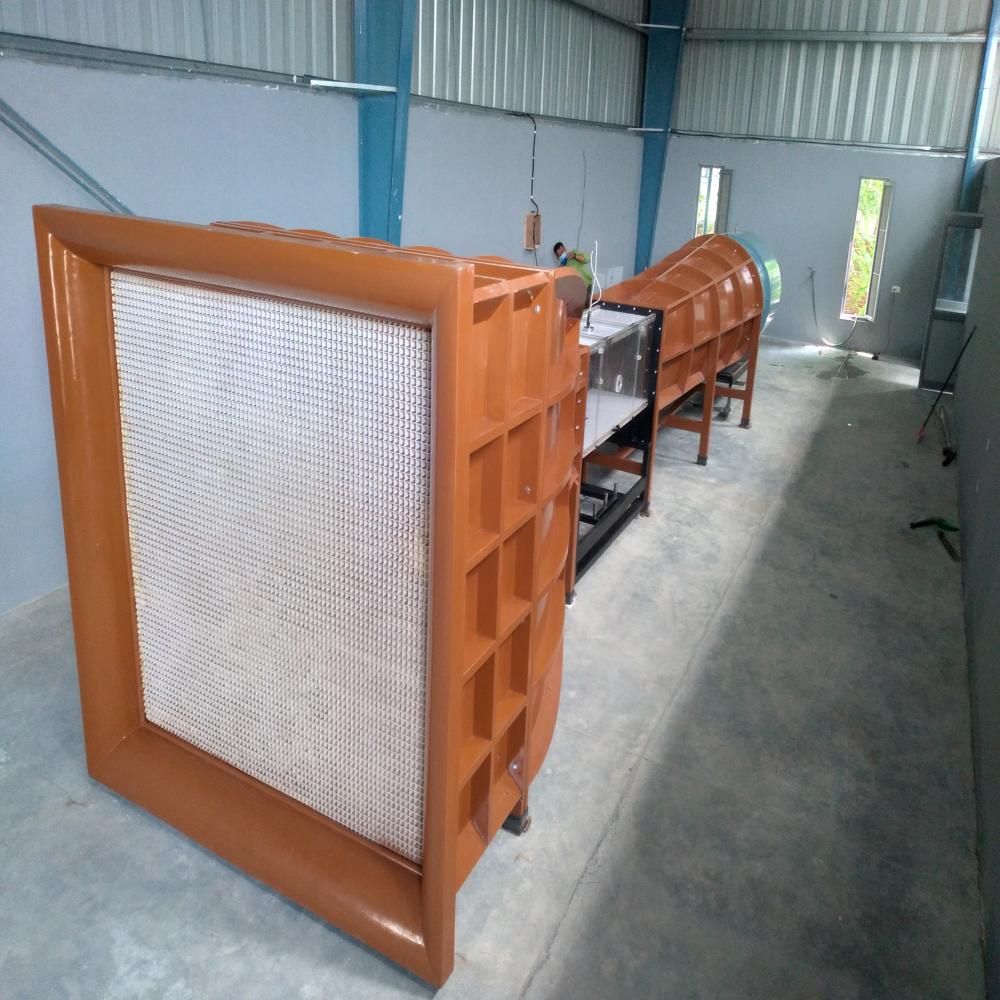
Low Speed Wind Tunnel
Price 500000.0 INR/ Unit
MOQ : 1 Unit
Low Speed Wind Tunnel Specification
- Material
- Aluminum Alloy Body, Transparent Acrylic Test Section, Stainless Steel Fasteners
- Processing Type
- Precision Fabrication
- Condition
- New
- Technology
- Subsonic Open-Circuit Wind Tunnel
- Dimension (L*W*H)
- Approx. 2200 x 800 x 1200 mm
- Power Mode
- Electric
- Voltage
- 220-240V, 50Hz
- Power Consumption
- 1200 W
- Pressure Output
- Up to 500 Pa Differential
- Application
- Aerodynamics Research, Educational Laboratories, Product Testing, Aerospace Engineering
- Coating Type
- Powder Coated Exterior
- Accessories
- Pitot Tube, Manometer, Smoke Generator, Honeycomb Flow Straightener, Model Support, Control Panel
- Display
- Digital Air Speed & Pressure Display
- Calibration
- Factory Calibrated with Certificate
- Fan Type
- Variable Speed Axial Fan
- Installation
- Bench Top with Leveling Feet
- Working Speed
- 0.5 - 35 m/s (Adjustable)
- Colour
- Blue & Metallic Silver
- Data Output
- USB/RS232 Interface (Optional)
- Flow Uniformity
- <2% Variation
- Test Section Size
- 300 mm x 300 mm x 700 mm (W x H x L)
- Control System
- Variable Frequency Drive (VFD) Control
- Ambient Operation Temperature
- 10C to 40C
- Equipment Type
- Low Speed Wind Tunnel
- Frame Construction
- Bolted Modular Frame
- Observation Window
- Full-Length Transparent Acrylic
- Maximum Test Model Length
- 250 mm
- Noise Level
- <65 dB
Low Speed Wind Tunnel About
Marketing Overview
Our low-speed wind tunnel systems are precision-engineered for advanced aerodynamic research, development, and testing across aerospace, automotive, and industrial applications. Designed with configurable open- or closed-circuit layouts, these systems deliver highly uniform, low-turbulence airflow for accurate and repeatable results.
With flexible test section geometries, scalable velocity ranges, and advanced instrumentation integration, the wind tunnel supports a wide range of experimental requirementsfrom basic flow visualization to complex aerodynamic force and stability studies. Energy-efficient designs, modular construction, and customizable configurations ensure optimal performance tailored to your research needs.
Technical Datasheet (Generalized Ranges)
1. System Configuration
- Circuit Type: Open-Circuit / Closed-Circuit
- Test Sections: Single / Dual / Triple (optional)
- Test Section Type: Open or Closed
2. Test Section Specifications
- Shape Options: Rectangular / Circular / Octagonal / Elliptical
- Typical Cross-Section Area: 0.25 m 200 m
- Typical Length: 1 m 30 m
- Access: Removable panels / viewing windows
3. Airflow Performance
- Velocity Range:
0.2 m/s 100 m/s (custom designs may exceed this) - Velocity Uniformity:
0.5% to 1% across test section - Turbulence Intensity:
< 0.2% 1% (depending on configuration)
4. Flow Quality & Efficiency
- Energy Ratio (Er):
3 6 (closed test section) - Drive System Efficiency ():
70% 90%
5. Drive System
- Fan Type: Axial / Mixed-flow
- Motor Power Range:
5 kW 100 MW (depending on scale) - Speed Control: Variable Frequency Drive (VFD)
6. Simulation Capability
- Reynolds Number (Re):
Up to 10 10 (depending on size and speed) - Additional Parameters (Optional):
- Froude Number (Fr)
- Mach Number (low subsonic regime, typically < 0.3)
- Rotor Tip Mach Number (rotorcraft studies)
7. Flow Conditioning
- Honeycomb straighteners
- Multi-layer damping screens
- Contraction ratio: 4:1 12:1
8. Instrumentation (Optional)
- Velocity measurement (Pitot-static tubes, hot-wire anemometry)
- Pressure measurement systems
- Force & moment balances
- Flow visualization (smoke, tufts, PIV-ready setups)
- Data acquisition system (DAQ)
9. Applications
- Aerospace aerodynamic testing
- Automotive drag and flow studies
- Wind engineering and environmental simulation
- Industrial product aerodynamics
- Academic and research institutions
10. Optional Configurations
- Acoustic wind tunnel
- Icing wind tunnel
- Vertical wind tunnel
- Atmospheric boundary layer tunnel
- Pressurized / variable-density tunnel
- Water tunnel variant
11. Customization
- Test section dimensions
- Velocity range
- Number of test sections
- Instrumentation packages
- Working fluid (air, compressed air, water)
Precision for Research and Education
Engineered for accurate aerodynamic analysis, this wind tunnel delivers consistently uniform airflow (variation <2%) and quiet operation at noise levels below 65 dB. The transparent test section and included observation window support real-time visualization, making it ideal for educational demonstrations and research experiments. Intuitive controls and digital displays enable straightforward measurements and data interpretation.
Versatile and Reliable Performance
With adjustable speeds from 0.5 to 35 m/s, the wind tunnel accommodates a variety of test models up to 250 mm in length. Its modular bolted frame and powder-coated exterior ensure durability, while stainless steel fasteners and high-grade materials guarantee long-term reliability. Factory calibration with certification assures users of measurement accuracy and repeatability.
FAQ's of Low Speed Wind Tunnel:
Q: How can the Low Speed Wind Tunnel be used for aerodynamics research?
A: The wind tunnel creates controlled and uniform airflow across a test section, allowing researchers to investigate aerodynamic characteristics such as lift, drag, and flow visualization. With its precision controls and included accessories like a Pitot tube and smoke generator, users can perform detailed experiments on scale models and gather quantitative data for analysis.Q: What are the primary applications of this wind tunnel?
A: This system is ideal for educational laboratories, aerodynamics research, product development, and aerospace engineering. Its flexible speed control and reliable measurement tools make it suitable for evaluating prototypes, teaching fluid dynamics concepts, and conducting wind resistance or performance tests on various objects.Q: When is calibration necessary, and how is it managed for this wind tunnel?
A: Calibration is essential to ensure measurement accuracy before initial use and periodically during operation. This unit comes factory-calibrated with a certificate, so it is ready to use upon installation. Routine calibration checks are recommended based on usage frequency or when precise data is critical for high-stakes testing.Q: Where should the Low Speed Wind Tunnel be installed for optimal operation?
A: The wind tunnel is designed for bench-top installation and features leveling feet for stability. It should be placed in a ventilated, dust-free laboratory or workshop with an ambient temperature between 10C and 40C to uphold measurement accuracy and device longevity.Q: What is the process for adjusting test speeds and recording data?
A: Test speeds are set via the Variable Frequency Drive (VFD) control panel, which adjusts the axial fan to the desired velocity (between 0.5 - 35 m/s). Airspeed and pressure readings can be monitored on the digital display, and recorded data can be exported through the optional USB/RS232 interface for further analysis.Q: How does the observation window enhance usability and experimentation?
A: The full-length transparent acrylic observation window gives users an unobstructed view of the test section, enabling real-time monitoring of airflow around the model. This feature is particularly beneficial for educational purposes, demonstrations, and detailed flow visualization studies using smoke or other tracers.Q: What benefits does the bolted modular frame offer for users?
A: The modular frame simplifies assembly, maintenance, and transportation. Components can be replaced or reconfigured with ease, providing flexibility for research labs or educational institutions that may need to adapt the wind tunnel for different experiments or relocate it between workspaces.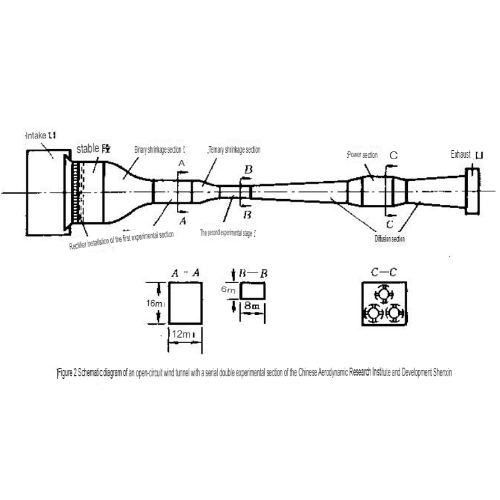
Tell us about your requirement

Price:
Quantity
Select Unit
- 50
- 100
- 200
- 250
- 500
- 1000+
Additional detail
Mobile number
Email

More Products in Subsonic Wind Tunnel Category
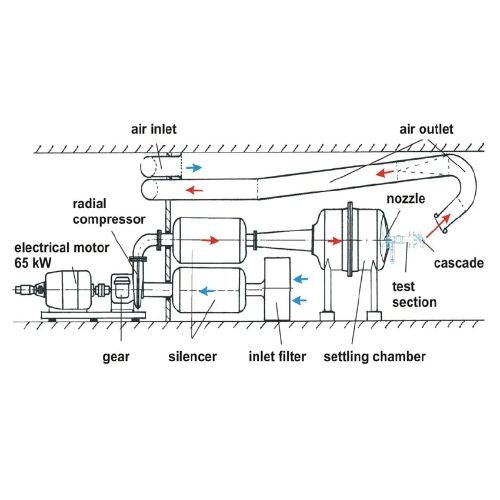
High Speed Wind Tunnel
Price 500000.0 INR / Unit
Minimum Order Quantity : 1 Unit
Dimension (L*W*H) : Approx. 8 m x 2.5 m x 2.2 m (can be customized)
Application : Aerodynamics Testing, Research & Development, Educational Purposes, Automotive and Aerospace Engineering
Technology : Other, Closed Circuit, Subsonic and Supersonic Wind Tunnel Technology
Accessories : Smoke Generator, Balance System, Model Mountings, Instrumentation Panel
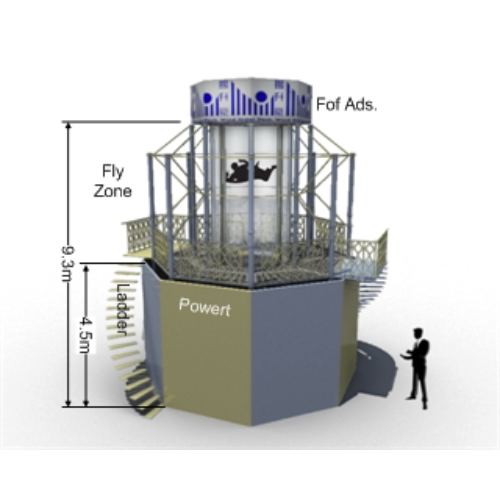
Vertical Wind Tunnel
Price 500000.0 INR / Unit
Minimum Order Quantity : 1 Unit
Dimension (L*W*H) : 12 m x 3.5 m x 5.5 m (customizable)
Application : Indoor skydiving, freefall simulation, military and astronaut training, wind resistance testing
Technology : Other, Vertical airflow circulation, variable speed fans
Accessories : Safety net, wind speed regulators, control panel, helmet, flight suit
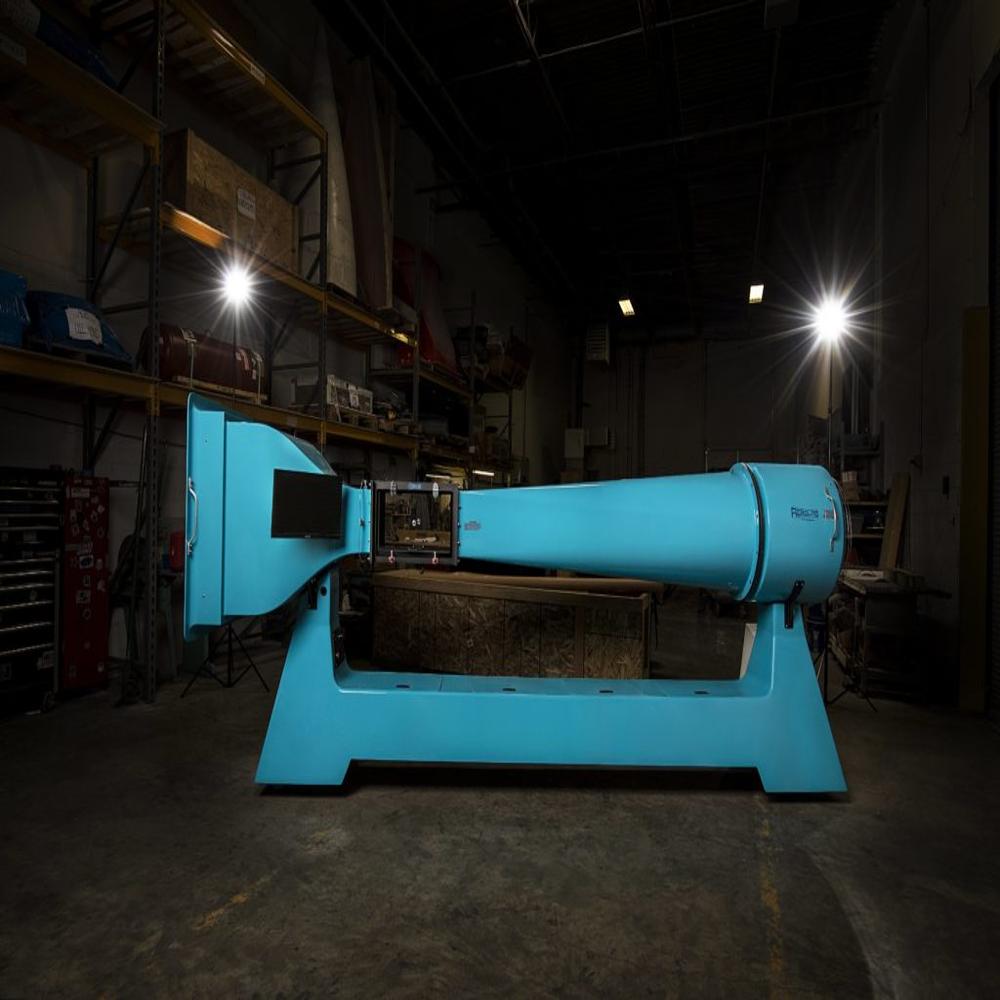
Educational Wind Tunnels
Price 500000.0 INR / Number
Minimum Order Quantity : 1 Number
Dimension (L*W*H) : Approx. 1200 mm x 600 mm x 900 mm
Application : Aerodynamics education, laboratory experiments, airflow visualization, research demonstration
Technology : Other, Wind tunnel simulation, controlled airflow
Accessories : Smoke generator, Flow visualization kit, Model mounting accessories, User manual
Subsonic Wind Tunnel
Price 500000.0 INR / Unit
Minimum Order Quantity : 1 Unit
Dimension (L*W*H) : Approx. 2500mm x 800mm x 1200mm
Application : Aerodynamics Research, Educational Laboratory Tests, Air Flow Analysis
Technology : Other, Subsonic Flow Simulation
Accessories : Smoke generator, Multitube manometer, Pitot tube, Model mounting system

 Send Inquiry
Our Products


Plot No - 553, Phase 2 GIDC Vatva, Near Railway Station Vatva,Ahmedabad - 382445, Gujarat, India

Mr Devang Modi
(Director)
Mobile :08045801217
 Send Inquiry
 Send SMS
Developed and Managed by Infocom Network Private Limited.
