
Call us now :08045801217
 Send Inquiry
 Send Inquiry
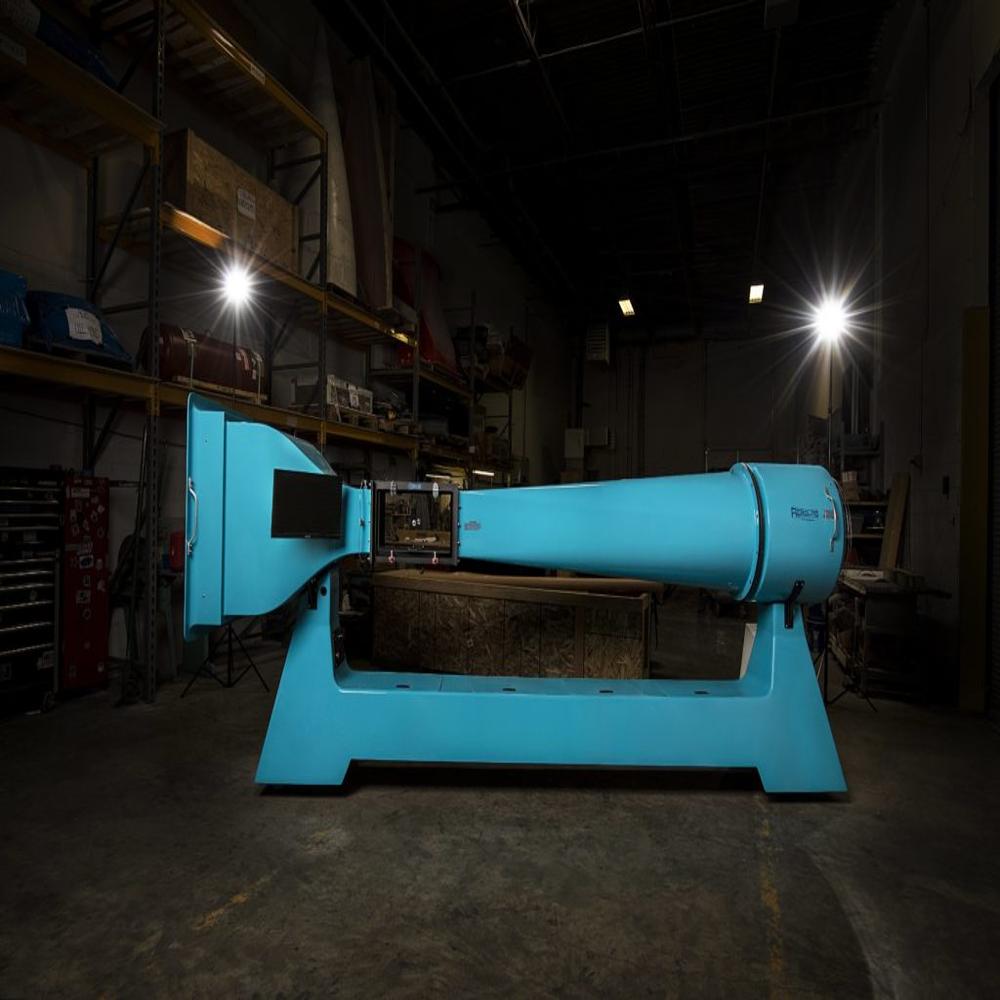
Subsonic Wind Tunnel
Price 500000.0 INR/ Unit
MOQ : 1 Unit
Subsonic Wind Tunnel Specification
- Equipment Type
- Subsonic Wind Tunnel
- Material
- Mild Steel / Stainless Steel
- Processing Type
- Machined & Fabricated
- Condition
- New
- Technology
- Subsonic Flow Simulation
- Dimension (L*W*H)
- Approx. 2500mm x 800mm x 1200mm
- Power Mode
- Electric
- Voltage
- 220-240V AC, 50/60Hz
- Power Consumption
- 2 - 5 kW (depending on fan size and test section)
- Pressure Output
- Differential Pressure Measurement via Manometer
- Application
- Aerodynamics Research, Educational Laboratory Tests, Air Flow Analysis
- Coating Type
- Powder Coated
- Accessories
- Smoke generator, Multi-tube manometer, Pitot tube, Model mounting system
- Data Acquisition
- Manual/Optional Digital Interface
- Model Support
- 3-Component Balance
- Noise Level
- Below 75 dB at full speed
- Observation Window
- Acrylic, Clear Visibility
- Fan Type
- Axial Flow Fan
- Control Panel
- Digital Speed Controller with Safety Lock
- Flow Uniformity
- 1% across test section
- Test Section Size
- 300mm x 300mm x 750mm
Subsonic Wind Tunnel About
Our subsonic wind tunnel systems are designed for precise aerodynamic testing in the low-to-moderate speed regime. Operating in the Mach range below compressibility-dominant conditions, these tunnels provide stable, uniform airflow ideal for aerodynamic performance evaluation, flow visualization, and force measurement.
Built on proven low-speed wind tunnel principles with enhanced power capacity, the system ensures improved flow control and higher velocity capability while maintaining low turbulence and high accuracy. Modular configurations and customizable test sections make it suitable for aerospace, automotive, and industrial research applications.
Technical Datasheet (Generalized Ranges)
1. System Classification
- Mach Number Range: 0.4 0.7
- Flow Regime: Subsonic
2. Test Section Specifications
- Type: Open or Closed
- Shape: Rectangular / Circular / Elliptical
- Cross-Section Area: 0.1 m50 m
- Length: 1 m 20 m
3. Flow Performance
- Velocity Range: 120 m/s 240 m/s
- Velocity Uniformity: 0.5% 1%
- Turbulence Intensity: < 0.2% 0.8%
4. Operating Characteristics
- Flow Nature: Incompressible to mildly compressible
- Reynolds Number: Up to 1010+
- Energy Efficiency: Comparable to low-speed tunnels with higher power demand
5. Drive System
- Fan Type: Axial / Mixed-flow
- Motor Power Range: 50 kW 5 MW
- Control: Variable Frequency Drive (VFD)
6. Key Components
- Inlet and settling chamber
- Honeycomb and flow straighteners
- Contraction cone
- Test section
- Diffuser
- Drive fan and motor system
7. Instrumentation (Optional)
- Velocity measurement (Pitot tubes, anemometers)
- Pressure measurement systems
- Force and moment balances
- Flow visualization tools (smoke, tufts)
- Data acquisition system (DAQ)
8. Applications
- Aircraft and air foil testing
- Automotive aerodynamics
- Industrial product testing
- Flow visualization studies
- Academic and R&D use
9. Customization Options
- Test section dimensions and geometry
- Maximum velocity range
- Open or closed circuit configuration
- Instrumentation packages
- Multi-test section configurations
Precise Subsonic Flow Simulation
This wind tunnel utilizes a machined and fabricated design to ensure subsonic flow conditions and optimal test section uniformity. Featuring a high-performance axial flow fan and digital speed controller, it provides reliable results for aerodynamic studies, model testing, and air flow analysis.
Versatile Observation and Measurement
Equipped with a clear acrylic window, multi-tube manometer, pitot tube, and 3-component balance, the setup enables detailed visual and quantitative analyses. The data acquisition system offers options for both manual recording and optional digital interfaces, catering to a broad range of research and teaching requirements.
Engineered for Reliability and Safety
Designed for educational and research environments, the wind tunnel features a powder-coated, mild steel or stainless steel build for durability. Operational safety is prioritized with a digital speed controller featuring a safety lock, ensuring secure and consistent usage in classroom or laboratory settings.
FAQ's of Subsonic Wind Tunnel:
Q: How is airflow uniformity maintained within the test section?
A: The wind tunnel employs precise axial flow fans and an optimized test section design, ensuring airflow uniformity within 1% across the 300mm x 300mm x 750mm test area. This supports accurate and repeatable aerodynamic measurements for various models.Q: What safety features are included with the wind tunnel's control panel?
A: The digital speed controller is outfitted with a safety lock, which prevents unauthorized or accidental adjustments. This safeguard ensures consistent operational parameters during sensitive experiments and protects users in educational and laboratory environments.Q: When should smoke visualization and differential pressure measurement be used?
A: Smoke visualization is typically used during airflow pattern studies to observe streamlines and flow behavior around models. Differential pressure measurements, using the multi-tube manometer or pitot tube, are essential for analyzing velocity profiles and aerodynamic forces at various flow speeds.Q: Where is this wind tunnel best applied?
A: This equipment is ideal for university laboratories, research institutions, and industrial settings focused on aerodynamics, air flow analysis, and applied physics. Its robust design supports both academic instruction and advanced research projects.Q: What is the process for collecting data in this wind tunnel?
A: Data can be manually recorded using traditional instruments or, optionally, via a digital interface connected to the tunnel's sensors. Measurements typically include velocity, pressure, and force data, all easily visible through the clear observation window.Q: What benefits does the 3-component balance provide during tests?
A: The 3-component balance enables precise measurement of lift, drag, and side forces acting on test models. This enhances the reliability of aerodynamic analysis and contributes to comprehensive airflow studies in both academic and research applications.Q: How energy-efficient is the wind tunnel during operation?
A: Depending on the chosen fan size and test section requirements, the tunnel consumes between 2 and 5 kW of electric power. Its efficient motor design and controlled speed regulation contribute to effective energy use, supporting continuous experimentation.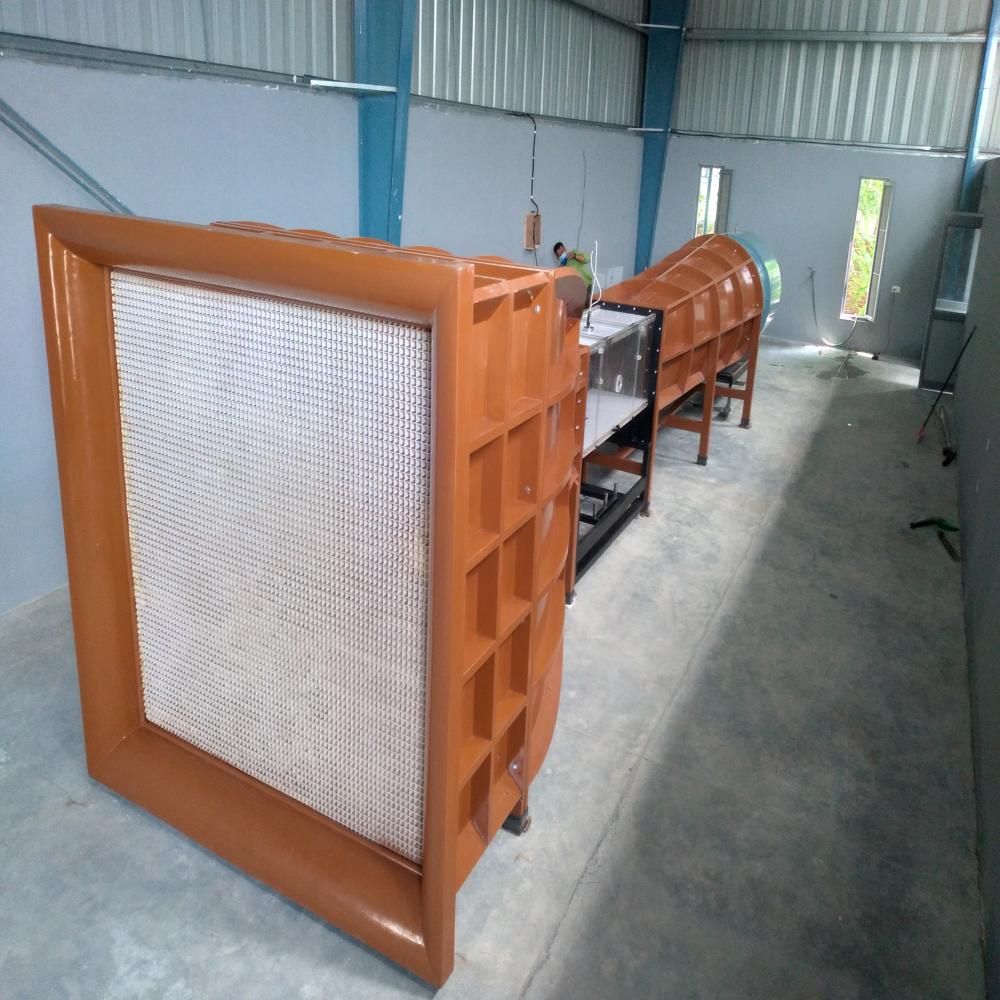
Tell us about your requirement

Price:
Quantity
Select Unit
- 50
- 100
- 200
- 250
- 500
- 1000+
Additional detail
Mobile number
Email

More Products in Subsonic Wind Tunnel Category
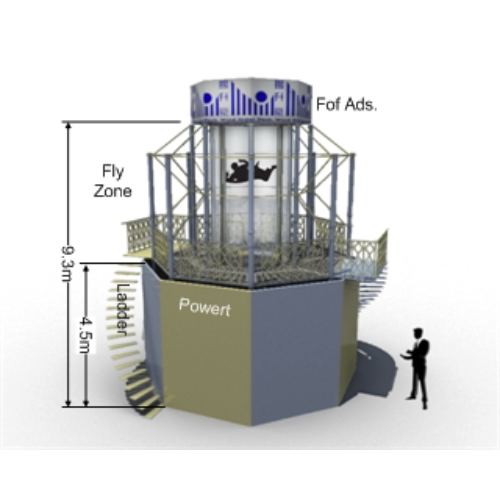
Vertical Wind Tunnel
Price 500000.0 INR / Unit
Minimum Order Quantity : 1 Unit
Dimension (L*W*H) : 12 m x 3.5 m x 5.5 m (customizable)
Material : Other, Highstrength steel structure, transparent polycarbonate walls
Technology : Other, Vertical airflow circulation, variable speed fans
Power Consumption : Approximately 250 kW depending on capacity
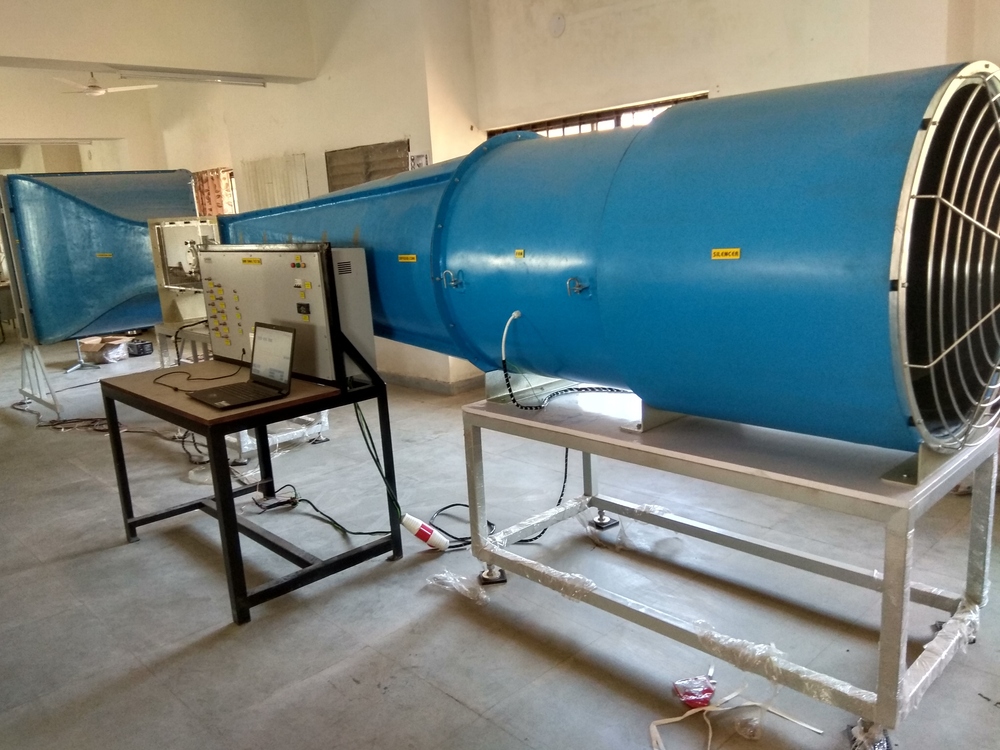
Open Circuit Wind Tunnels
Price 500000.0 INR / Unit
Minimum Order Quantity : 1 Unit
Dimension (L*W*H) : 2500 mm x 1100 mm x 1400 mm (standard model)
Material : Other, Highgrade Stainless Steel and Aluminum
Technology : Other, Open Circuit, Subsonic Flow Technology
Power Consumption : 3 kW to 12 kW (depending on model size)
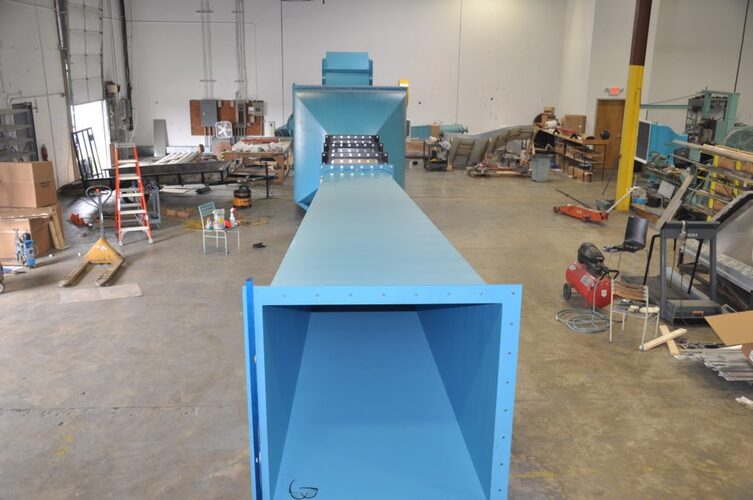
Blow Down Wind Tunnels
Price 500000.0 INR / Unit
Minimum Order Quantity : 1 Unit
Dimension (L*W*H) : 2500 mm x 900 mm x 1200 mm
Material : Other, Mild Steel
Technology : Other, Blow Down (High Pressure Reservoir, Subsonic/Supersonic Output)
Power Consumption : 48 kW
Educational Wind Tunnels Upgrade
Price 500000.0 INR / Number
Minimum Order Quantity : 1 Number
Dimension (L*W*H) : 2000 x 600 x 1500 mm
Material : Other, Mild Steel, Acrylic Panels, Aluminium Frame
Technology : Other, Closed Circuit Subsonic Wind Tunnel System
Power Consumption : 1.5 kW

 Send Inquiry
Our Products


Plot No - 553, Phase 2 GIDC Vatva, Near Railway Station Vatva,Ahmedabad - 382445, Gujarat, India

Mr Devang Modi
(Director)
Mobile :08045801217
 Send Inquiry
 Send SMS
Developed and Managed by Infocom Network Private Limited.
