
Call us now :08045801217
 Send Inquiry
 Send Inquiry
Cryogenic Wind Tunnel / Quiet Nozzle
Price 500000.0 INR/ Piece
MOQ : 1 Piece
Cryogenic Wind Tunnel / Quiet Nozzle Specification
- Equipment Type
- Cryogenic Wind Tunnel Quiet Nozzle
- Material
- Stainless Steel / High-Strength Aluminum Alloy
- Processing Type
- Precision Machined, Assembled under Controlled Environment
- Condition
- New
- Technology
- Cryogenic, Laminarization, Acoustically Treated
- Dimension (L*W*H)
- 1200 mm x 400 mm x 400 mm
- Power Mode
- Electric Powered, High-Capacity Cryogenic Cooling System
- Voltage
- 380V / 50Hz
- Power Consumption
- Up to 25 kW, depending on test parameters
- Pressure Output
- 0.1 - 4 bar (configurable)
- Application
- Aerodynamics Research, Aerospace Component Testing, Aircraft Model Testing, Academic and Industrial R&D
- Coating Type
- Anti-corrosive Surface Treatment
- Accessories
- Interchangeable Nozzle Inserts, Calibration Devices, Pressure Sensing Ports, Mounting Brackets
- Frame Type
- Vibration Isolated Base Frame
- Flow Uniformity
- 0.5% (across test section)
- Monitoring
- Integrated Sensors for Temperature, Pressure, and Flow Rate
- Calibration Standards
- ISO 17025 Compliant
- Temperature Range
- Down to 110K (Cryogenic Operation)
- Noise Reduction Level
- < 65 dB (at 1 meter distance)
- Control System
- PLC-based Automation with Touchscreen Interface
- Compressor Type
- Oil-free, High-Efficiency Cryogenic Compressor
- Safety Features
- Over-pressure, Over-temperature Alarms, Emergency Shutdown Switch
- Test Section Diameter
- 200 mm
Cryogenic Wind Tunnel / Quiet Nozzle About
Overview
The Cryogenic Wind Tunnel with Quiet Nozzle (CWT-QN) is an advanced aerodynamic testing system designed to accurately replicate real-flight Reynolds numbers and ultra-low turbulence conditions. By operating at cryogenic temperatures, the system increases air density to achieve full-scale Reynolds number simulation, while the precision-engineered quiet nozzle minimizes free-stream disturbances.
This enables highly reliable prediction of boundary layer transition, flow separation, and aerodynamic performancecritical for next-generation aerospace design and validation.
Technical Datasheet (Generalized Specifications)
Flow Regime
- Mach Number Range: 0.2 1.5 (Transonic) / up to 4.0 (Supersonic variants)
- Reynolds Number Range: 10 10 per meter
- Flow Velocity: 70 1,200 m/s
Cryogenic Operation
- Operating Temperature: 80 150 K
- Cooling Medium: Liquid Nitrogen (LN)
- Temperature Stability: 1 2 K
Quiet Nozzle Performance
- Turbulence Intensity: < 0.05% (ultra-low disturbance flow)
- Acoustic Disturbance Level: Significantly reduced vs conventional nozzles
- Boundary Layer Noise Control: Optimized contour and surface finish
Test Section
- Test Section Size: 0.2 1.5 m (typical cross-section)
- Test Pressure: 0.5 5 bar (adjustable)
- Optical Access: Large viewing windows (optional)
Flow Quality
- Total Pressure Stability: 0.5%
- Flow Uniformity: 0.20.5% across test section
Instrumentation & Measurement
- Force Measurement: High-precision balance systems
- Temperature Sensors: Cryogenic-rated thermocouples
- Pressure Measurement: High-resolution transducers
- Flow Diagnostics: PIV, Schlieren, LDA (optional)
Cooling & Thermal Systems
- LN Consumption: 50 500 L/hr (depending on operation)
- Insulation: Vacuum-insulated test section
- Heat Exchanger: High-efficiency cryogenic heat exchangers
Control & Automation
- Control System: PLC/SCADA-based integrated control
- Real-time Monitoring: Temperature, pressure, flow, turbulence
- Data Acquisition: High-speed synchronized DAQ
Safety Systems
- Cryogenic Safety: Pressure relief, oxygen deficiency monitoring
- Emergency Shutdown: Automated system protection
- Structural Integrity: Low-temperature compatible materials
Key Advantages
- True Reynolds Number Simulation for real-flight accuracy
- Ultra-Low Turbulence Flow for precise transition studies
- Improved Prediction of Separation & Drag
- Reduced Scale Effects in Testing
Applications
- Aircraft wing and airfoil testing
- Boundary layer transition studies
- High-lift and drag reduction research
- Supersonic inlet and nozzle development
- Aerospace R&D and certification testing
Precision Cryogenic Testing
Engineered for temperatures as low as 110K, this quiet nozzle wind tunnel supports high-fidelity simulation environments crucial for aerospace and materials research. Its cryogenic capability ensures accurate reproduction of real-world conditions, while maintaining strict flow uniformity for consistent testing results.
Quiet, Safe, and Reliable Operation
Operating at less than 65 dB at 1 meter, the nozzle maintains a tranquil testing space. Safety is paramount, with over-pressure and over-temperature alarms plus an emergency shutdown switch integrated into the vibration-isolated base frame. Oil-free cryogenic compressors and anti-corrosive treatment guarantee clean and enduring performance.
User-friendly Control and Monitoring
An advanced PLC-based automation system with a touchscreen interface provides intuitive setup, control, and monitoring of test parameters. Integrated sensors measure temperature, pressure, and flow rate in real-time. ISO 17025-compliant calibration and interchangeable accessories round out an easily adaptable testing setup.
FAQ's of Cryogenic Wind Tunnel / Quiet Nozzle:
Q: How does the cryogenic wind tunnel quiet nozzle achieve such low noise levels during operation?
A: The system is acoustically treated and utilizes a vibration-isolated base frame along with oil-free, high-efficiency cryogenic compressors. This engineering minimizes both structural and airborne sound, ensuring that noise stays below 65 dB at a one-meter distance.Q: What types of tests can be conducted with this cryogenic wind tunnel nozzle?
A: It is ideal for aerodynamics research, aerospace component testing, aircraft model validation, and both academic and industrial R&D. The nozzle accommodates a wide range of experimental set-ups due to its interchangeable inserts and configurable pressure output from 0.1 to 4 bar.Q: When should the calibration devices be used with this system?
A: Calibration devices should be used during initial setup, after maintenance, and periodically as part of routine quality assurance. This ensures measurement precision and maintains compliance with ISO 17025 standards.Q: Where can this equipment be installed safely?
A: It can be installed in research laboratories, industrial R&D centers, and academic institutions, provided there is sufficient power supply (380V/50Hz) and proper ventilation to accommodate the unit's cryogenic and electrical requirements.Q: What is the process for adjusting test parameters such as temperature and pressure?
A: Parameters are managed via the PLC-based automation system with a touchscreen interface. Users can configure temperature (down to 110K), pressure (0.1-4 bar), and flow settings, while integrated sensors continually monitor and log all critical conditions.Q: How do the safety features enhance operational security during testing?
A: The system is equipped with over-pressure and over-temperature alarms, and an emergency shutdown switch to prevent equipment damage or safety hazards. Automated monitoring ensures prompt alerts and immediate shutdown in case of anomalies.Q: What are the benefits of using a cryogenic wind tunnel with laminarization technology?
A: Laminarization technology significantly enhances flow uniformity (0.5%), enabling precise aerodynamic measurements. This results in highly reliable data for aerodynamic research, material testing in cryogenic conditions, and model validation studies.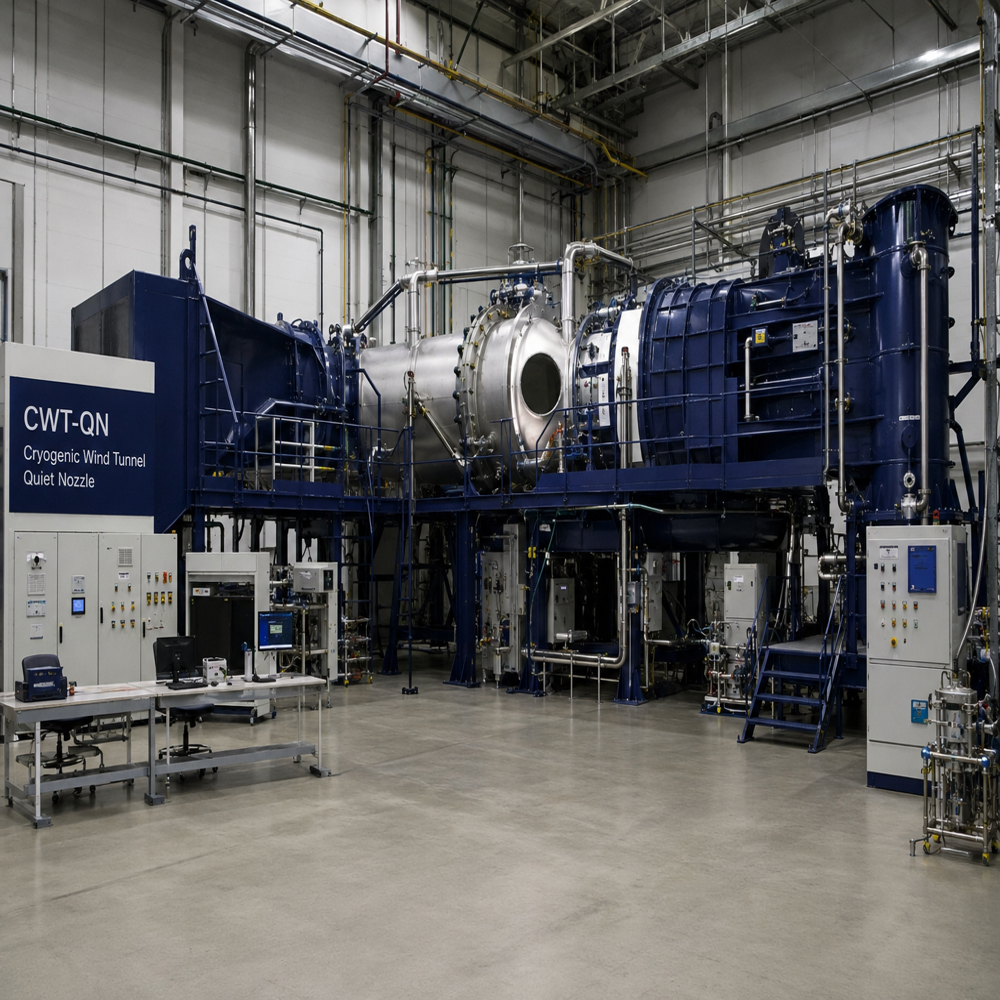
Tell us about your requirement

Price:
Quantity
Select Unit
- 50
- 100
- 200
- 250
- 500
- 1000+
Additional detail
Mobile number
Email

More Products in Speciality Wind Tunnels Category
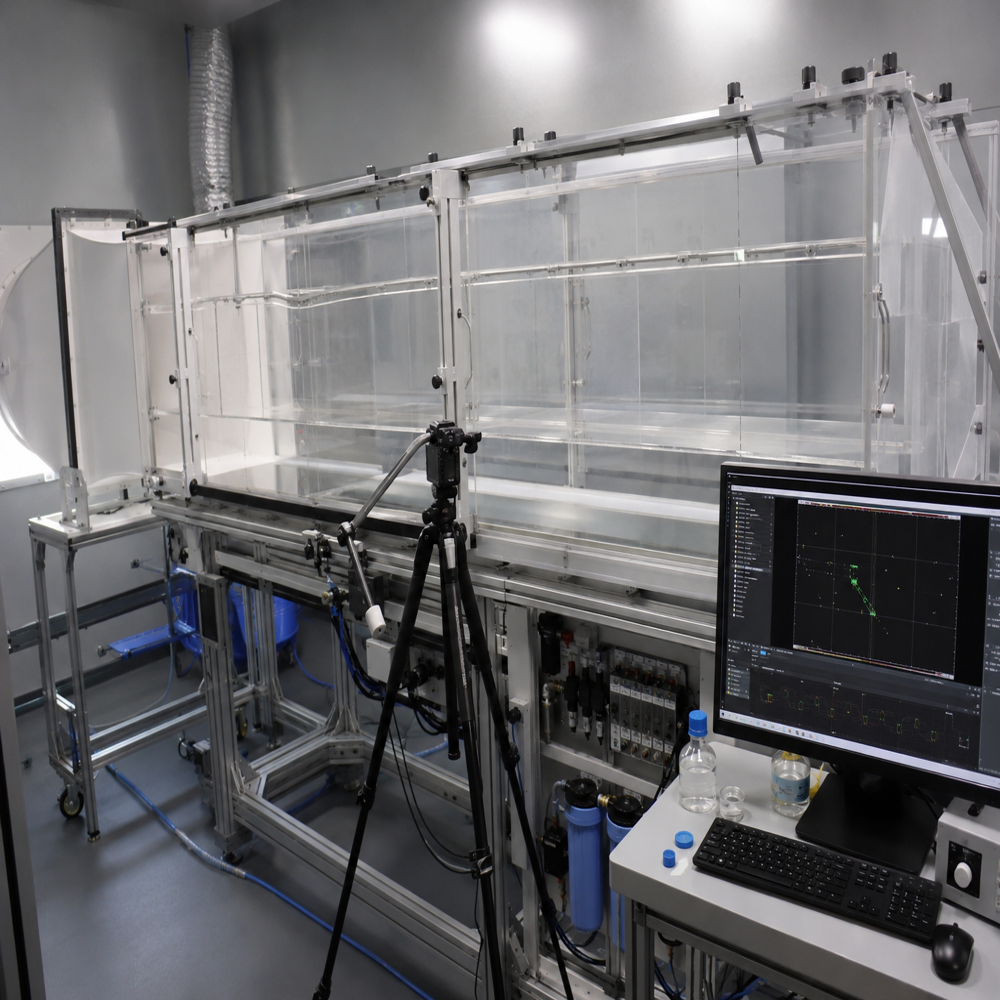
Bio-Assyl Wind Tunnel
Price 500000.0 INR / Unit
Minimum Order Quantity : 1 Unit
Technology : Other, Aerodynamic Flow Control
Power Mode : Electric
Power Consumption : Approximately 250 W
Material : Other, Stainless Steel, Polycarbonate
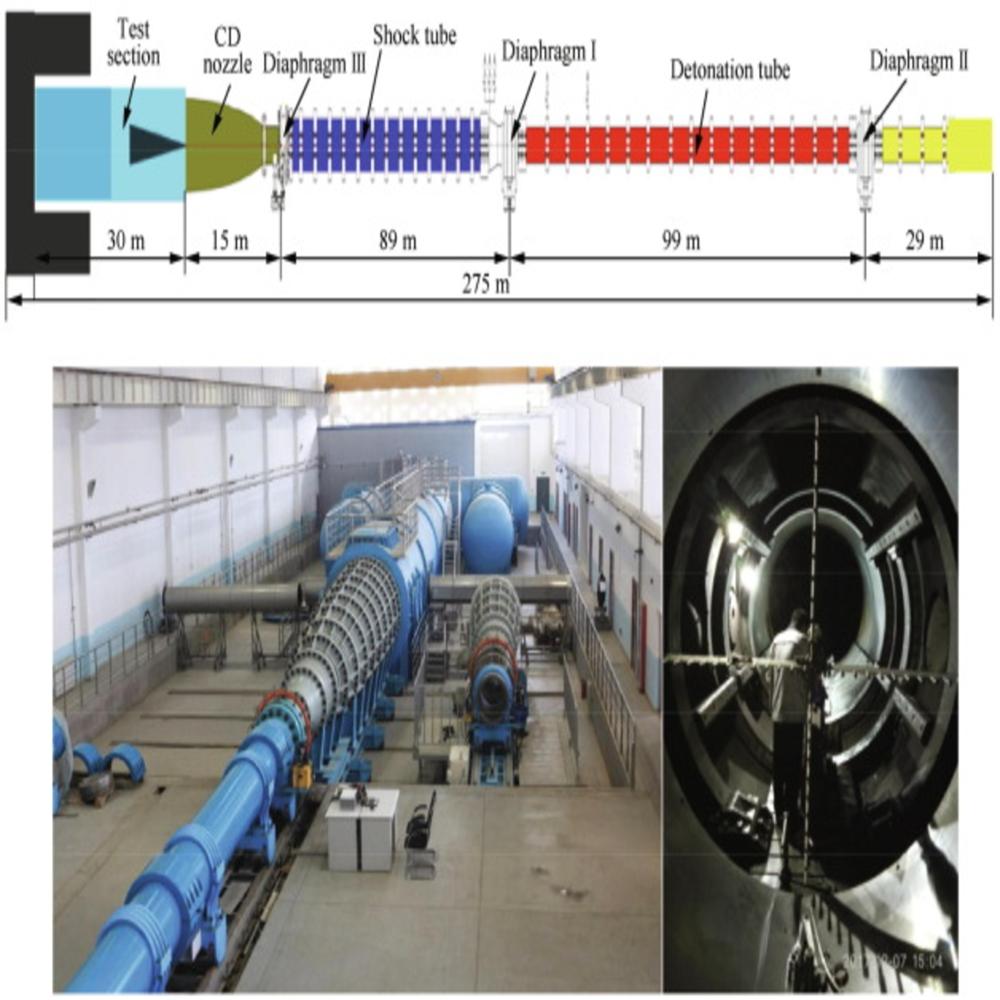
Hypersonic High Enthalpy Wind Tunnel
Price 500000.0 INR / Unit
Minimum Order Quantity : 1 Unit
Technology : Other, High Enthalpy Plasma Arc Heated Wind Tunnel
Power Mode : Electric
Power Consumption : 120 kW 500 kW
Material : Other, Stainless Steel, HighGrade Alloy Steel, Quartz Windows

Plasma Wind Tunnel
Price 500000.0 INR / Unit
Minimum Order Quantity : 1 Unit
Technology : Other, Plasma Arc, HighTemperature Simulation
Power Mode : Electric
Power Consumption : 50 200 kW
Material : Other, Stainless Steel
Specialized Wind Tunnel
Price 500000.0 INR / Unit
Minimum Order Quantity : 1 Unit
Technology : Other, Advanced Aerodynamics Simulation
Power Mode : Electric
Power Consumption : 3.5 kW
Material : Other, Mild Steel

 Send Inquiry
Our Products


Plot No - 553, Phase 2 GIDC Vatva, Near Railway Station Vatva,Ahmedabad - 382445, Gujarat, India

Mr Devang Modi
(Director)
Mobile :08045801217
 Send Inquiry
 Send SMS
Developed and Managed by Infocom Network Private Limited.
