
Call us now :08045801217
 Send Inquiry
 Send Inquiry
Trisonic Wind Tunnel
Price 500000.0 INR/ Number
MOQ : 1 Number
Trisonic Wind Tunnel Specification
- Equipment Type
- Wind Tunnel
- Material
- Mild Steel
- Processing Type
- Mechanical
- Condition
- New
- Technology
- Trisonic (Subsonic, Transonic, Supersonic)
- Dimension (L*W*H)
- Customized as per client requirement
- Power Mode
- Electric
- Voltage
- 220V - 440V
- Power Consumption
- Ac Motor Driven, varies by model
- Pressure Output
- Adjustable
- Application
- Aerospace and Research Laboratories
- Coating Type
- Epoxy Coated
- Accessories
- Control Panel, Data Acquisition System, Model Support
- Installation Type
- Stationary
- Test Section Size
- Typically 200 mm x 200 mm
- Working Speed
- Up to Mach 4.0
- Noise Level
- <85 dB
- Cooling System
- Forced Air
- Data Output
- Digital
- Max Test Model Size
- Configurable
- Safety Feature
- Emergency Stop, Overload Protection
- Observation Window
- Acrylic, Impact Resistant
- Control Type
- PLC Controlled
Trisonic Wind Tunnel About
Short Marketing Overview
Our Trisonic Wind Tunnel System is a versatile, high-performance aerodynamic testing facility designed to cover subsonic, transonic, and supersonic regimes within a single platform. Engineered for precision and flexibility, the system enables seamless Mach number control using adaptive nozzle and diffuser technologies, ensuring high-quality flow conditions across all speed ranges.
With advanced boundary-layer control, excellent optical access, and modular model mounting configurations, this system supports both fundamental research and industrial development, making it ideal for aerospace, automotive, and structural aerodynamics applications.
Technical Datasheet (Generalized Ranges)
Flow Performance
- Mach Number Range: 0.3 3.5
- Mach Number Accuracy: 0.003 to 0.01
- Dynamic Pressure Range: 1 6 bar
- Pressure Accuracy: 3 10 mbar
Test Section
- Typical Dimensions:
- Length: 1.5 2.5 m
- Width: 0.3 1.0 m
- Height: 0.5 1.5 m
- Configuration: Rectangular / customizable
- Optical Access: Multi-window (high optical clarity)
- Wall Type:
- Solid + suction-assisted (transonic regime)
- Angle of Attack Range: 10 to +40
Flow Control System
- Subsonic Control: Adjustable diffuser system
- Supersonic Control: Variable geometry Laval nozzle
- Transonic Control:
- Wall suction / boundary layer control
- Adjustable plenum chamber & wall geometry
Pressure & Storage System
- Pressure Reservoir Volume: 100 500 m
- Maximum Storage Pressure: up to 20 30 bar
- Fill Time: ~60 120 minutes (depending on system size)
Nozzle & Geometry
- Nozzle Contraction Ratio: 5 10
- Type: Adjustable / interchangeable contour nozzles
- Diffuser: Variable geometry for efficient flow recovery
Test Duration
- Blowdown Operation: 10 60 seconds (typical, depending on conditions)
Reynolds Number
- Typical Range: 110 110 per meter
- Adjustable via pressure and Mach control
Measurement & Instrumentation
- Force & Pressure Measurement:
- Static pressure sensors (10100 Hz)
- Dynamic pressure sensors (up to 100 kHz)
- Flow Diagnostics:
- Particle Image Velocimetry (PIV)
- Pressure-Sensitive Paint (PSP)
- Infrared thermography
- Schlieren / shadowgraph systems
- Structural Measurement:
- Deformation / strain measurement systems
Model Mounting Options
- Rear sting mount
- Side-wall mounting
- Floor / ceiling mounting
- Custom modular fixtures
Key Features
- Single facility for multi-regime testing (subsonic to supersonic)
- Advanced boundary layer suction system for transonic flow quality
- High flow uniformity and repeatability
- Flexible test section and mounting configurations
- Suitable for large and instrumented models
Applications
- Aircraft and UAV aerodynamic testing
- Missile and high-speed vehicle development
- Automotive aerodynamics
- Structural wind engineering (bridges, buildings)
- Fundamental aerodynamics research
Advanced Trisonic Technology
This wind tunnel integrates trisonic capabilities, allowing for seamless transitions between subsonic, transonic, and supersonic speeds up to Mach 4.0. Controlled by a reliable PLC system, researchers and engineers can simulate a wide range of aerodynamic scenarios, supporting comprehensive experimental needs.
User-Centric Design & Safety
With a clear, impact-resistant acrylic observation window and easy-to-configure test model support, the Trisonic Wind Tunnel ensures safe and adaptable operation. The inclusion of an emergency stop and overload protection prioritizes operator safety, while digital data output and a modern control panel streamline data collection and experiment management.
Versatile Applications & Customization
Designed for aerospace and research laboratories, this equipment accommodates various testing requirements with its adjustable pressure output, customizable model size, and tailored dimensions. Its epoxy coating and forced air cooling system guarantee longevity and operational reliability in demanding environments.
FAQ's of Trisonic Wind Tunnel:
Q: How does the Trisonic Wind Tunnel operate across different speed regimes?
A: The Trisonic Wind Tunnel is engineered to operate seamlessly across subsonic, transonic, and supersonic regimes, achieving speeds up to Mach 4.0. A PLC-based control system manages airflow conditions, allowing users to switch between regimes as required by the research or test scenario.Q: What types of experiments or tests can be conducted using this wind tunnel?
A: This wind tunnel is designed for a variety of aerodynamic experiments, particularly in aerospace and research laboratory settings. Researchers can test scale models, assess aerodynamic forces, visualize flow patterns, and gather digital data for analysis across trisonic speed ranges.Q: When is it necessary to utilize the emergency stop or overload protection features?
A: Emergency stop and overload protection should be activated in the event of unexpected operational anomalies, equipment malfunction, or to prevent potential hazard to personnel or the tested model. These safety features are especially critical when testing at high speeds or with high-pressure outputs.Q: Where can observation and data recording take place during testing?
A: Operators can observe model behavior in real-time through the acrylic, impact-resistant observation window in the test section. Digital data output, collected via the data acquisition system, is accessible from the control panel, allowing for remote monitoring and recording during tests.Q: What is the process for installing and configuring this wind tunnel for a specific application?
A: The installation involves positioning the stationary wind tunnel as per lab requirements. Key parameters like test model size, pressure output, and dimensions are customized during setup. Model supports and accessories are configured to accommodate specific experimental setups, ensuring optimal test conditions.Q: How does the forced air cooling system contribute to tunnel performance?
A: The forced air cooling system prevents overheating of mechanical components during high-speed operations. This ensures stable performance, prolongs equipment lifespan, and allows experiments to run without thermal-related interruptions.Q: What benefits does the digital data output provide to researchers?
A: Digital data output streamlines data collection, minimizing manual intervention and errors. Researchers benefit from real-time monitoring, precise data logging, and easier post-processing of aerodynamic measurements, facilitating more accurate and efficient analyses.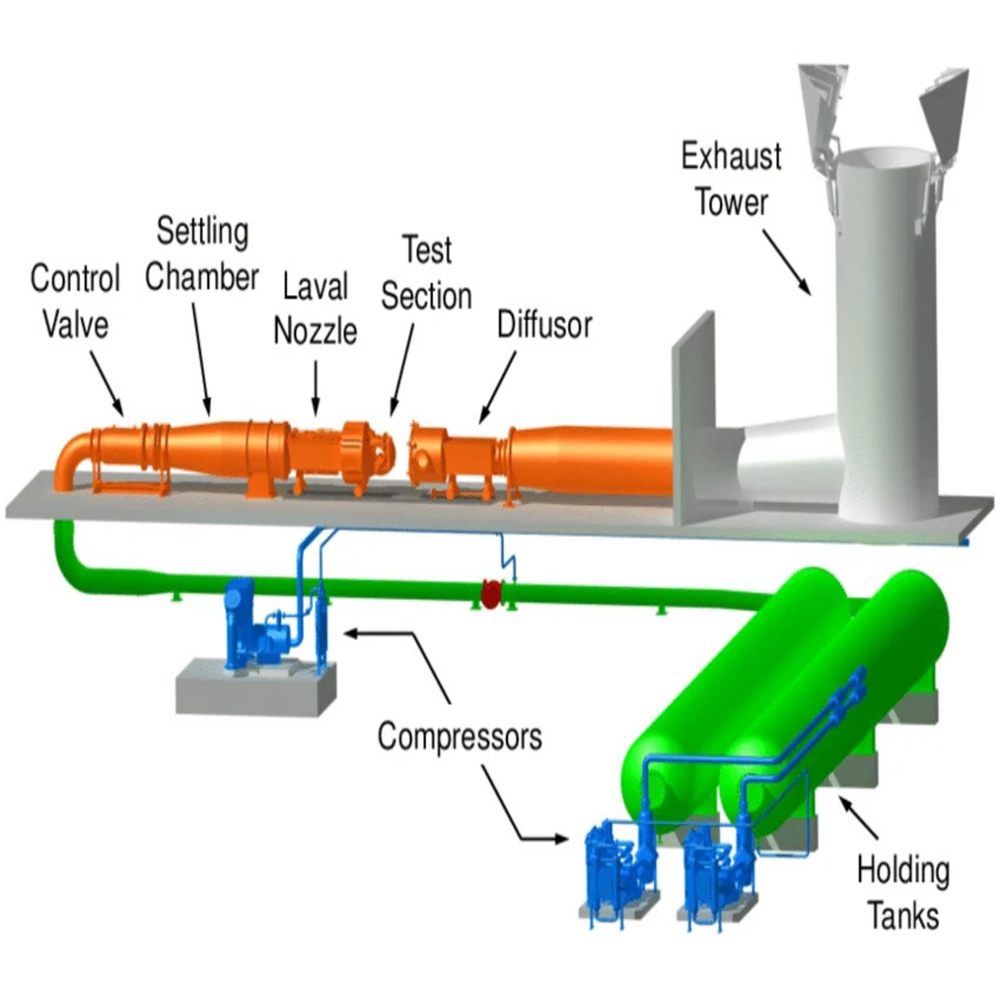
Tell us about your requirement

Price:
Quantity
Select Unit
- 50
- 100
- 200
- 250
- 500
- 1000+
Additional detail
Mobile number
Email

More Products in Speciality Wind Tunnels Category
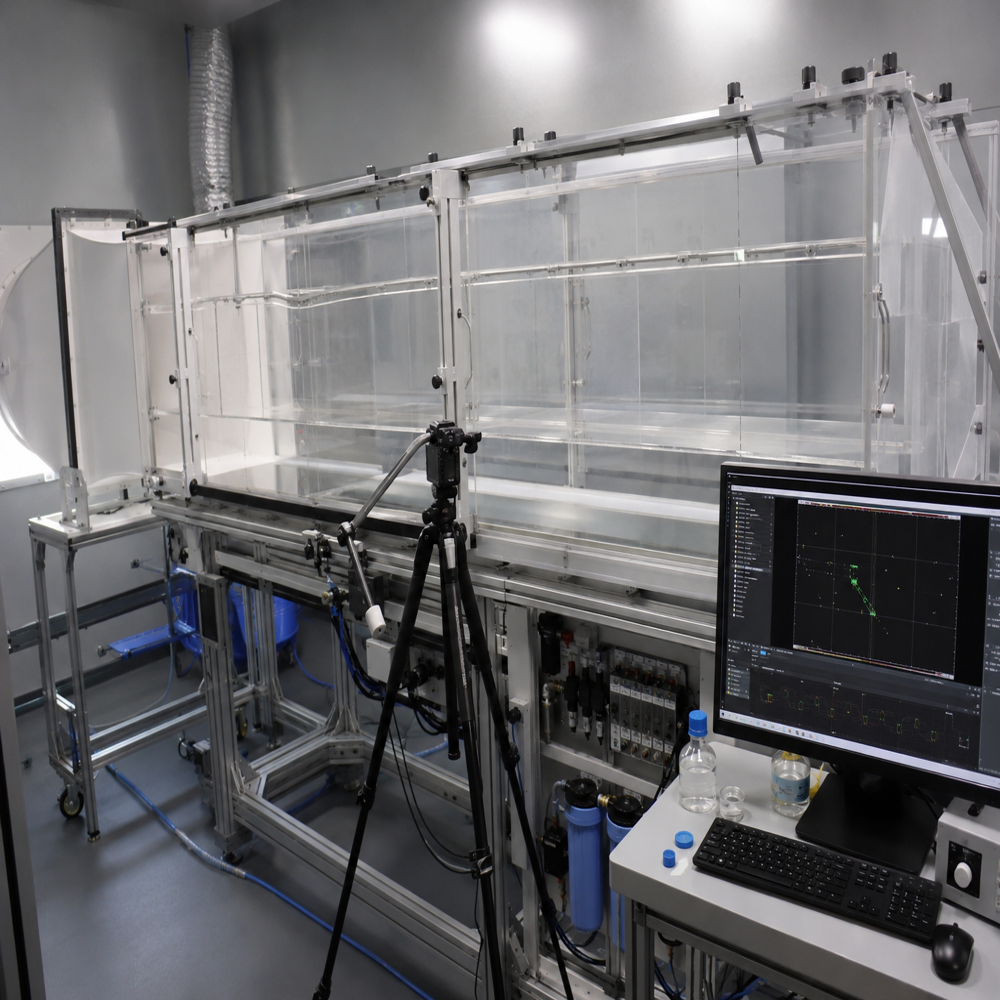
Bio-Assyl Wind Tunnel
Price 500000.0 INR / Unit
Minimum Order Quantity : 1 Unit
Dimension (L*W*H) : 1800 mm x 700 mm x 700 mm
Accessories : HEPA Filter, Control Panel, Mounting Stand
Voltage : 220240V AC
Pressure Output : Consistent, Adjustable Airflow
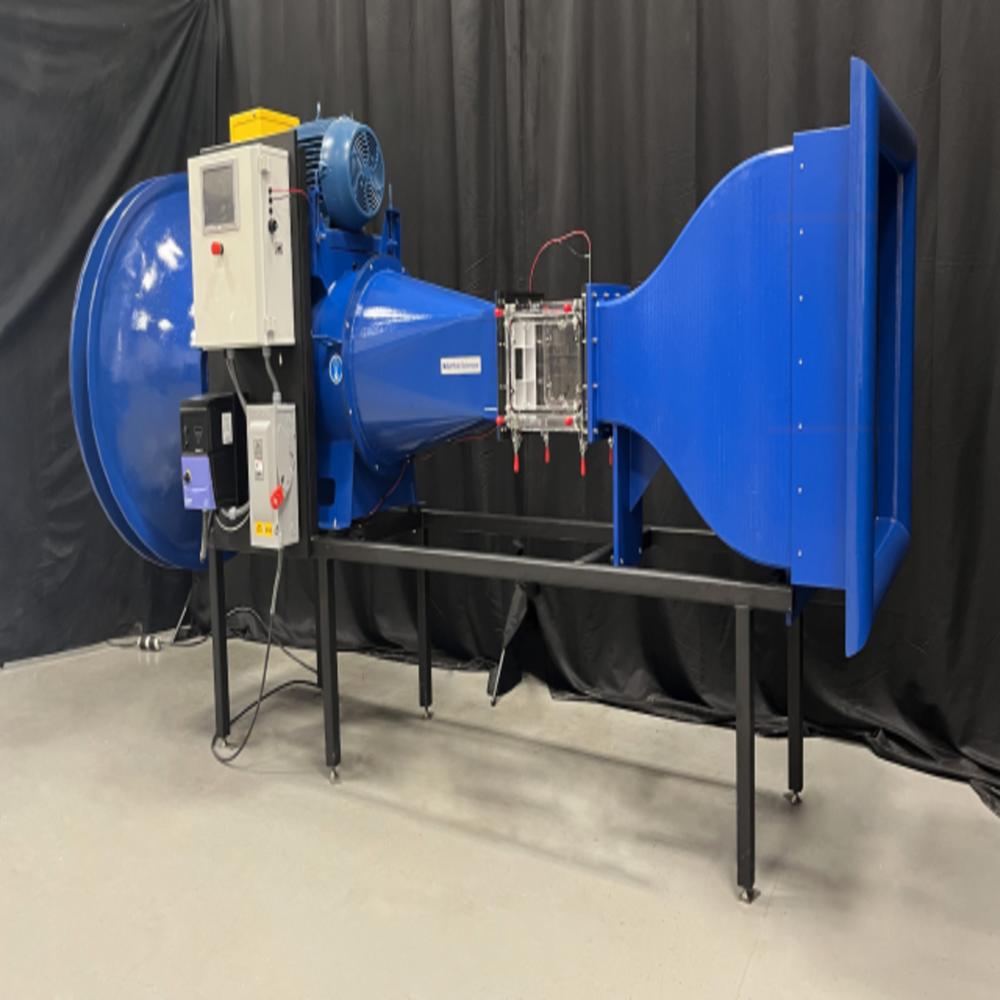
Calibration Wind Tunnel
Price 500000.0 INR / Unit
Minimum Order Quantity : 1 Unit
Dimension (L*W*H) : 2200 x 900 x 1250 mm
Accessories : Digital Control Panel, Airflow Straighteners, Test Section Fixtures
Voltage : 220240 V, 50 Hz
Pressure Output : Up to 1500 Pa
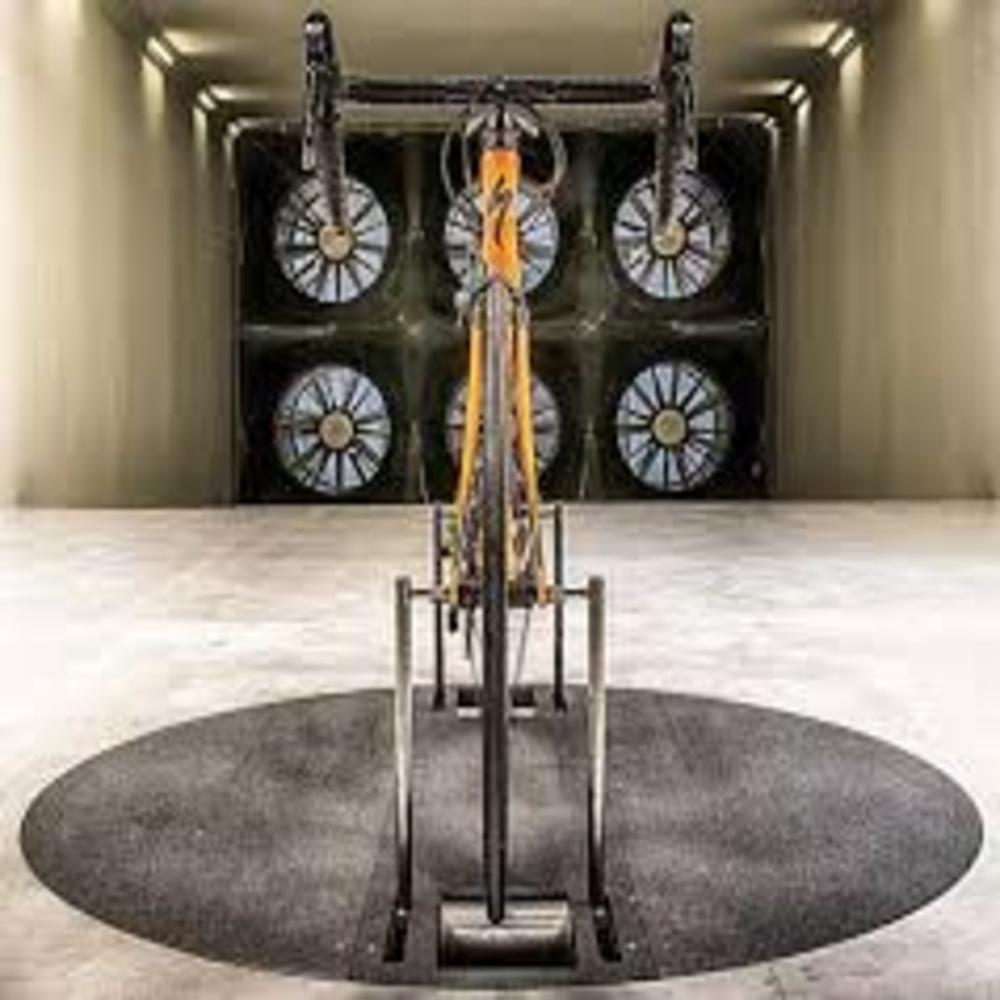
Specialized Wind Tunnel
Price 500000.0 INR / Unit
Minimum Order Quantity : 1 Unit
Dimension (L*W*H) : 3500 mm x 1200 mm x 1800 mm
Accessories : Measuring Sensors, Data Logger, Digital Display Console
Voltage : 220240 V AC
Pressure Output : Up to 1500 Pa
Shock Tunnel
Minimum Order Quantity : 1 Number
Dimension (L*W*H) : Customizable as per client requirements
Accessories : Comprehensive control panels, gas supply systems, pressure sensors
Voltage : 220V / 380V
Pressure Output : Up to several hundreds of bars (exact rating customizable)

 Send Inquiry
Our Products


Plot No - 553, Phase 2 GIDC Vatva, Near Railway Station Vatva,Ahmedabad - 382445, Gujarat, India

Mr Devang Modi
(Director)
Mobile :08045801217
 Send Inquiry
 Send SMS
Developed and Managed by Infocom Network Private Limited.
