
Call us now :08045801217
 Send Inquiry
 Send Inquiry
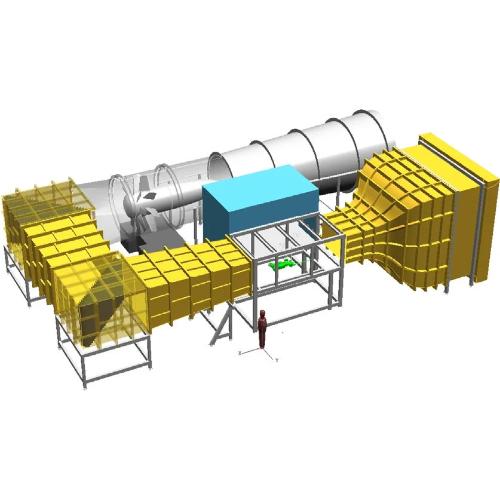
Wide Boundry Layer Wind Tunnel
MOQ : 1 Unit
Wide Boundry Layer Wind Tunnel Specification
- Equipment Type
- Wide Boundary Layer Wind Tunnel
- Material
- Mild Steel, Acrylic Sheet, Aluminium
- Processing Type
- Mechanical
- Condition
- New
- Technology
- Blower driven closed circulation wind tunnel
- Dimension (L*W*H)
- 3000 mm x 600 mm x 1200 mm
- Power Mode
- Electric
- Voltage
- 220V, 50/60Hz
- Power Consumption
- 1.5 kW
- Pressure Output
- Up to 2500 Pa
- Application
- Aerodynamics Education, Research, Measurement of Boundary Layer parameters
- Coating Type
- Powder Coated
- Accessories
- Manometers, Pitot Tube, Hot-wire Anemometer (optional), Test Objects, Control Panel
- Suitable For
- Engineering Colleges, R&D Centers, Testing Labs
- Control System
- Variable Speed Drive
- Glass Panels
- For side viewing and illumination
- Flow Visualization
- Smoke Generator provided
- Working Speed
- 0-40 m/s (Adjustable)
- Fan Type
- Axial/Blower Type
- Measurement Range
- Velocity, Static and Total Pressure Profiles
- Construction
- Leak-proof, modular design
- Noise Level
- <65 dB
- Test Section Size
- 600 mm x 300 mm x 1200 mm
Wide Boundry Layer Wind Tunnel About
A large-width boundary layer wind tunnel designed for aerodynamic and environmental studies requiring extensive lateral test coverage, ideal for urban-scale flow simulations and multiple model arrangements.
Facility Overview
- Type: Wide Boundary Layer Wind Tunnel (WT3)
- Application: Urban wind environment, dispersion studies, large-area flow analysis
- Flow Condition: Atmospheric boundary-layer simulation with extended width coverage
Test Section Dimensions
- Height: 1.7 m
- Width: 13.6 m
- Length: 15.0 m
- Configuration: Extra-wide test section for multi-model and cityscape simulations
Aerodynamic Performance
- Maximum Wind Speed: up to 7.5 m/s
- Flow Regime: Low-speed, highly controlled boundary-layer flow
- Flow Characteristics: Stable, large-scale turbulence structures representative of natural wind environments
Testing Capabilities
- Urban wind environment and cityscape modelling
- Pedestrian wind comfort and safety analysis
- Pollutant and tracer gas dispersion studies
- Large-area wind loading distribution on structures
- Interaction effects between multiple buildings or infrastructure elements
Key Features
- Exceptionally wide test section for simultaneous multi-object testing
- Optimized for low-speed atmospheric boundary-layer replication
- Suitable for detailed urban planning and environmental assessment studies
- Enables high-resolution spatial wind field analysis across large models
Precision Engineering for Advanced Aerodynamics
This wind tunnel integrates a variable speed control (0-40 m/s) and high-quality instrumentation for detailed study of boundary layer phenomena. Its modular design supports easy adaptation for various experiments, while the glass panels allow clear visualization and illumination. Built using mild steel, acrylic, and aluminium, it combines durability with performance, making it ideal for both instructional and research purposes.
Enhanced Observation and Flow Visualization
Side glass panels and internal illumination create optimal conditions for examining airflow patterns. The smoke generator included enables real-time, detailed flow visualization-essential for both teaching and analyzing complex aerodynamic phenomena. This feature enriches the learning and experimental process for students and researchers alike.
Comprehensive Measurement and Control
Users can measure velocity, static and total pressure profiles, and noise within the tunnel using provided accessories. The advanced control system and variable speed drive ensure precise airflow management, while output capabilities up to 2500 Pa support a wide range of experimental setups. This makes the wind tunnel suitable for fundamental studies and sophisticated aerodynamic investigations.
FAQ's of Wide Boundry Layer Wind Tunnel:
Q: How is the working speed of the wind tunnel adjusted?
A: The wind tunnel is equipped with a variable speed drive, allowing precise adjustment of airflow between 0 and 40 m/s to suit different experimental requirements.Q: What are the main applications of this wide boundary layer wind tunnel?
A: It is primarily used for aerodynamics education, research, and measurement of boundary layer parameters in engineering colleges, R&D centers, and testing laboratories.Q: When should the smoke generator be used during experiments?
A: The smoke generator is employed when flow visualization is needed to observe and analyze the airflow patterns and boundary layer behavior around test objects.Q: Where are the pressure and velocity measurements conducted in the tunnel?
A: Measurements are typically taken within the test section using manometers, Pitot tubes, and optional hot-wire anemometers to generate velocity, static and total pressure profiles.Q: What benefits does the modular, leak-proof design offer users?
A: This design allows for flexible configuration, easy maintenance, and ensures that airflow remains consistent and uncontaminated during experiments.Q: How does the wind tunnel support teaching and research processes?
A: The equipment offers hands-on experience in measuring, visualizing, and interpreting aerodynamic data, making it invaluable for both educational demonstrations and advanced research projects.Q: Which accessories are included for experimental setups?
A: Standard accessories include manometers, a Pitot tube, test objects, and a control panel, with an optional hot-wire anemometer available for more advanced velocity measurements.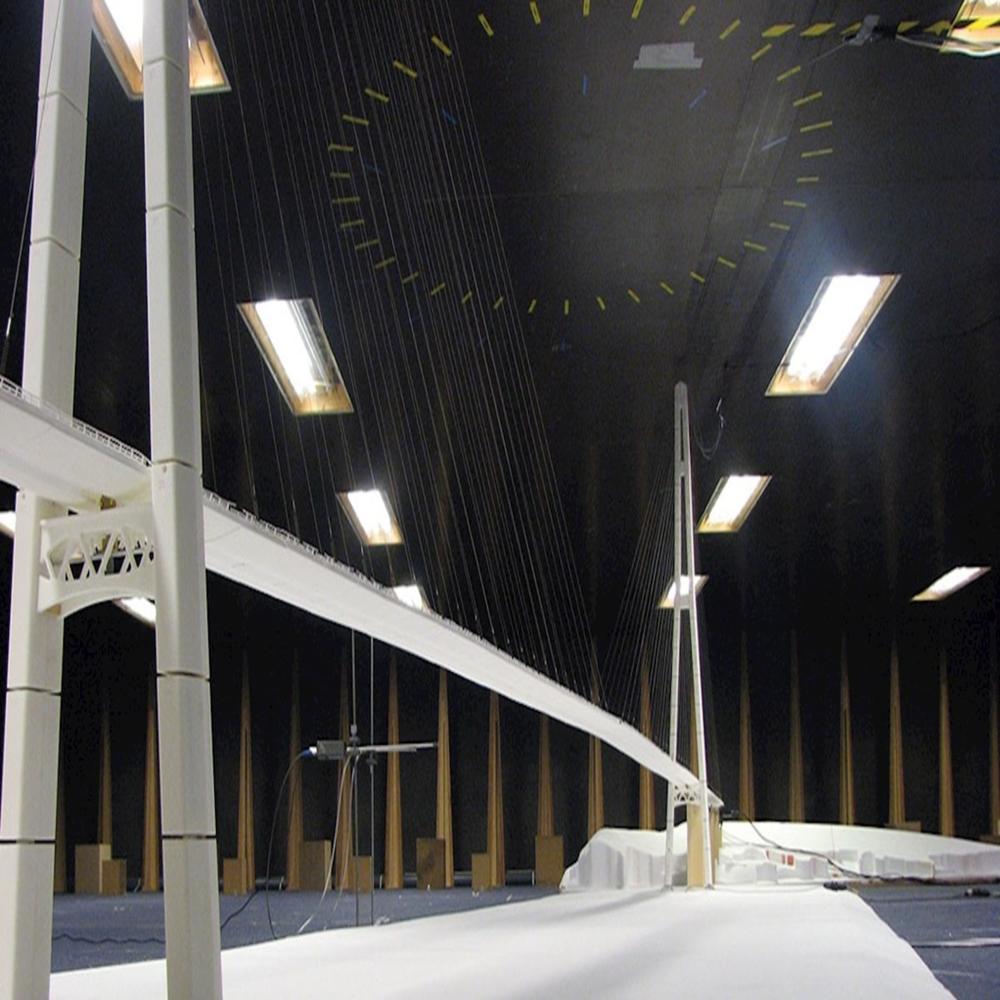
Tell us about your requirement

Price:
Quantity
Select Unit
- 50
- 100
- 200
- 250
- 500
- 1000+
Additional detail
Mobile number
Email

More Products in Speciality Wind Tunnels Category
Hypersonic High Enthalpy Wind Tunnel
Price 500000.0 INR / Unit
Minimum Order Quantity : 1 Unit
Processing Type : Other, Thermal and Fluidic Simulation
Voltage : 380 V 440 V, 3Phase AC
Technology : Other, High Enthalpy Plasma Arc Heated Wind Tunnel
Power Mode : Electric
Bio-Assyl Wind Tunnel
Price 500000.0 INR / Unit
Minimum Order Quantity : 1 Unit
Processing Type : Other, Precision Machined
Voltage : 220240V AC
Technology : Other, Aerodynamic Flow Control
Power Mode : Electric
Hot-Shot Wind Tunnel
Price 500000.0 INR / Unit
Minimum Order Quantity : 1 Unit
Processing Type : Other, Air Flow Simulation
Voltage : 380V / 440V, 3 Phase
Technology : Other, Wind Tunnel Technology
Power Mode : Electric
Large Wind Tunnel
Price 500000.0 INR / Unit
Minimum Order Quantity : 1 Unit
Processing Type : Other, Dynamic Airflow Testing
Voltage : 415V, 3 Phase
Technology : Other, Advanced Wind Simulation Technology
Power Mode : Electric

 Send Inquiry
Our Products


Plot No - 553, Phase 2 GIDC Vatva, Near Railway Station Vatva,Ahmedabad - 382445, Gujarat, India

Mr Devang Modi
(Director)
Mobile :08045801217
 Send Inquiry
 Send SMS
Developed and Managed by Infocom Network Private Limited.
